
Opposition Mounts Against Chicken Breeder Factory Farming Planned near Lincoln
Residents came together at a meeting in Scopwick and Kirkby Green Village Hall to oppose an application for a new chicken breeder factory farm.
Some 23 people attended the gathering against the intensive animal facility that would confine 39,600 hens to breed chickens for the intensive meat industry near Lincoln. [1]
The industrialisation of animal agriculture has created an inefficient and environmentally harmful food system and should be stopped, villagers say.
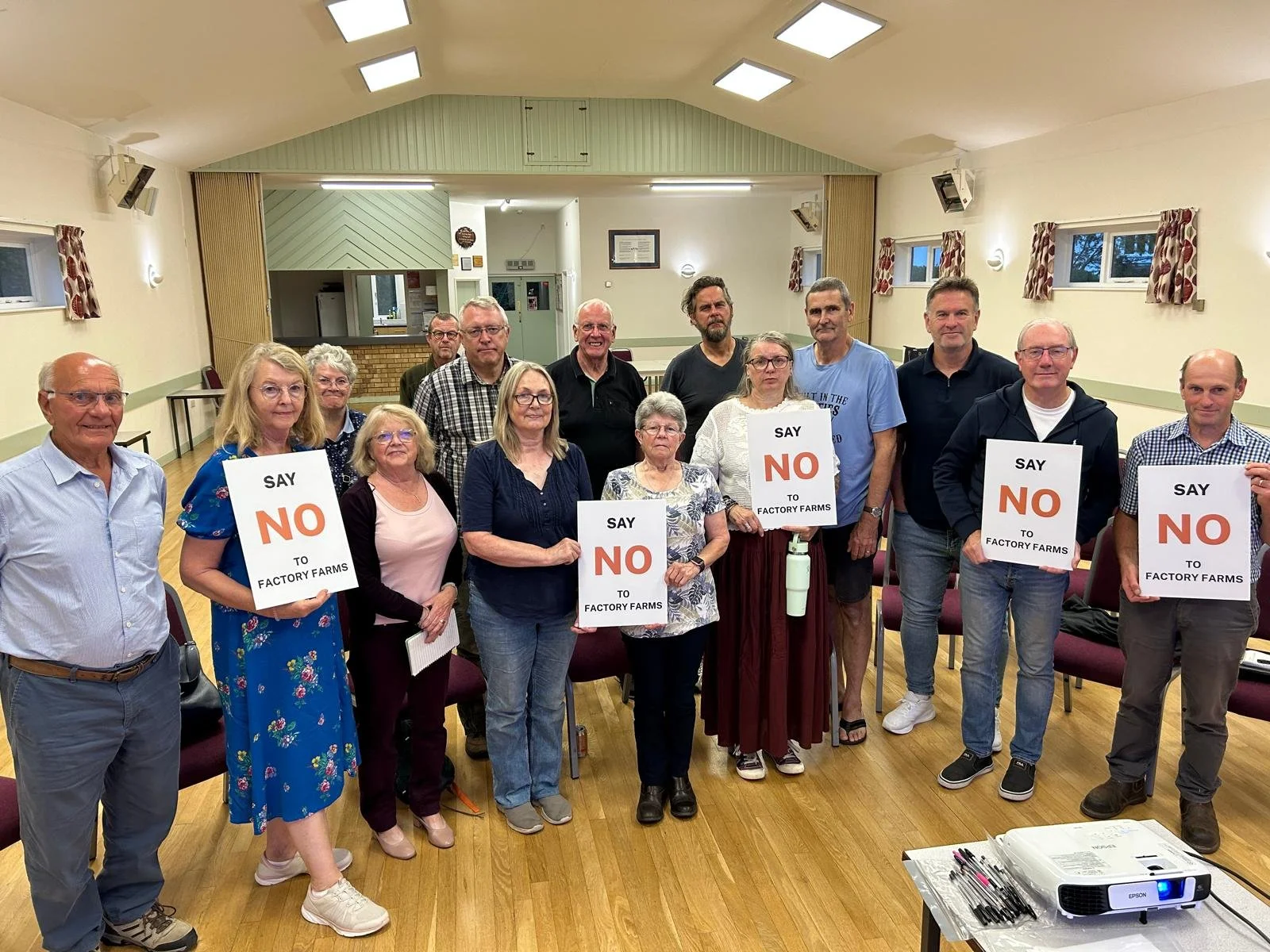
A factory farm application on land next to Cobblers Lane in Scopwick, Lincoln, has received a growing tide of opposition from local residents.
At a meeting at the end of September, two dozen residents shared their views and discussed plans to stop the spread of intensive chicken farms locally,
Many raised concerns about potential impacts on respiratory illnesses, odours and air pollution if the factory farm is built. Despite pre-application advice, no air quality assessment has been submitted; the application also has an incomplete fly management plan.
The application has so far received 134 objections and no comments in support.
Jane Godfrey, 65, an accountant CFO who lives in Scopwick said:
“I have severe concerns about the smell, flies and potential massive environmental impact. The smell will spread all over the village from this factory. How can we have our windows open and enjoy our gardens with the smell and potential for flies invading the village?
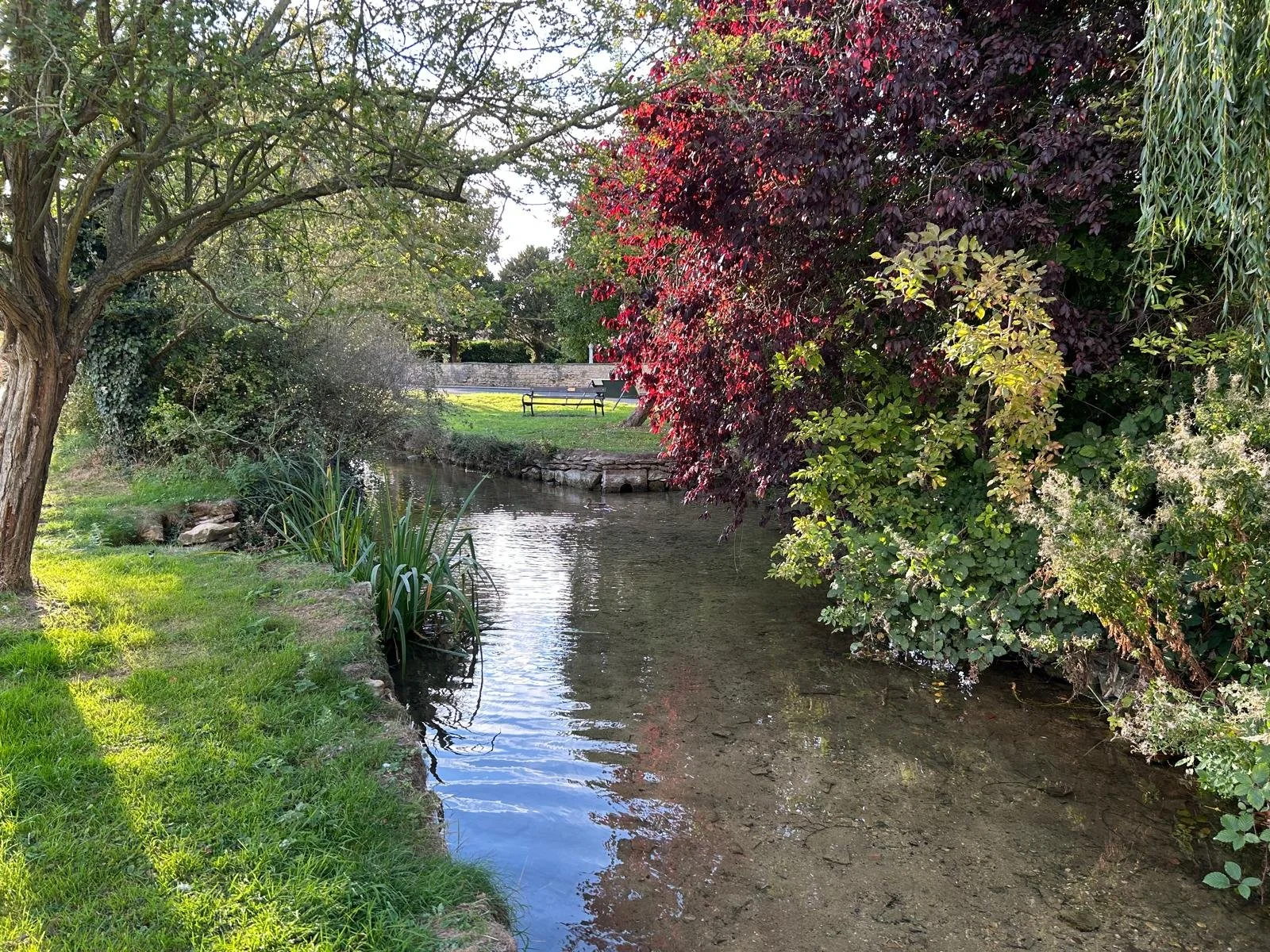
“We have one of the very few natural chalk streams running through the village. If there is polluted runoff from the factory, it has the potential to seep into the water course as we have a very high water table, and that will not only kill the steam and potentially the water vole population but it could also be an issue all the way downstream.”
Climate change and rainforest destruction were high on residents’ priorities, and the need to change the food system for the sake of future generations.
The factory farm food system is a leading cause of food insecurity, due to the inefficiency of growing or importing crops to feed to animals. The UK imports more than 3 million tonnes of soya a year, most of which comes from South America and has been directly shown to cause deforestation of the Amazon rainforest. [2] Professor Paul Behrens, British Academy Global Professor and expert in food system transformations, is calling for a “shift to healthy, plant-rich diets” to make our farming methods more resilient. [3]
Despite all the environmental risks, the intensive unit housing 39,600 hens will not be subject to Environment Agency (EA) regulation, as it is below the 40,000 threshold. This means that there would be no ongoing scrutiny of the impacts.
Robert Bates, a Scopwick resident, has raised particular concerns about “the critical endangered status of the Witham Orb freshwater mussel, which is a resident of the River Witham and could be severely affected by site runoff.”
Communities Against Factory Farming (CAFF) is supporting local residents to oppose the plans.
Jo Lazarus, Campaign Coordinator at Communities Against Factory Farming, said:
“There is strong local opposition to these factory farm expansion plans because they would harm residents’ quality of life and entrench an inefficient and cruel form of farming. No community should be forced to accept industrial factory farming on its doorstep.
“Factory farming relies on keeping vast numbers of birds indoors in appalling conditions, it devastates wildlife and ecosystems, and risks our food security through its reliance on imports for feed.
“This intensive chicken breeding facility would prolong a factory farm food system built on waste and inefficiencies that experts say risk our food security. Instead, councils should be promoting sustainable, nature‑positive forms of food production.”
ENDS
Word count: 621
Communities Against Factory Farming (CAFF) works with residents across the UK to review planning applications for intensive farms and submit strong, evidence‑based planning objections. The organisation has helped communities block and overturn multiple intensive poultry unit applications when councils overlooked key environmental and animal‑welfare issues.
Find high-quality photos here: https://show.pics.io/scopwick-lincoln-cobblers-lane-farm
All images in this press release, on our social media and on our website can be used with credit to Communities Against Factory Farming under ‘fair use’ for the purposes of reporting.
For information or further comments, please contact:
Daniel (Press Back Office), press@caff.org.uk, +44 7895 780283
Notes for Editors:
[2] https://www.sei.org/publications/soy-and-uk-food-system/
[3] https://www.nebriefing.org/expert-briefings/food-security