
Locals Speak Out against ‘Triple Whammy’ of Intensive Chicken Farms Planned for Broadland
Local residents joined forces at a public meeting on 12 July 2026 to oppose three factory farm applications in Broadland, Norfolk.
Residents expressed concerns about odours, water pollution and the cumulative effects of so many factory farms in Norfolk.
Locks Farm has already converted old turkey sheds into “broiler” sheds without planning permission, leading to a massive increase in the number of birds confined.
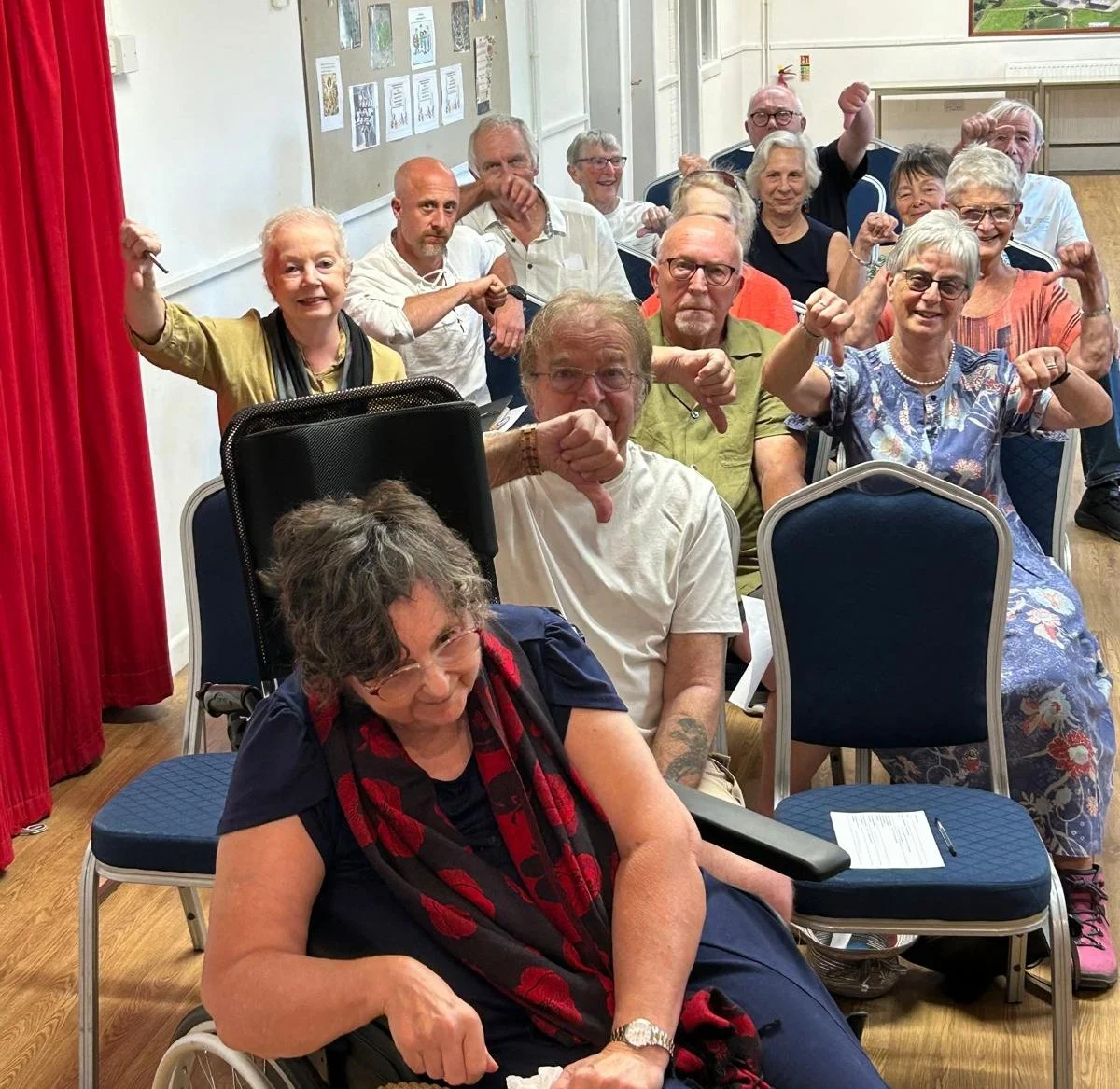
Residents from Haveringland, Cawston and Oulton came together in Cawston Village Hall on Sunday 12 July 2026 to express their concerns about three applications to build or expand intensive poultry units (IPU) in Broadland.
Two major chicken factory farm expansions are planned in Haveringland, while a new IPU is being proposed between Oulton and Cawston.
Residents raised fears about the “triple whammy” effect of these three new facilities, with Norfolk already suffering the environmental and biodiversity impacts of being one of the UK’s factory farming hotspots. Other attendees expressed dismay about odours and air pollution from intensive chicken farming.
Locks Farm in Haveringland has already converted old turkey sheds into “broiler” sheds without planning permission, leading to a massive increase in the number of birds confined. It is now seeking retrospective approval, but residents say that it is already impacting their quality of life. [1]
Nigel Boldero, retired, who lives in Haveringland, said:
“This unauthorised development has been operational for over a year and is regularly generating awful smells, noise, flies and a steady flow of heavy goods vehicles which are wrecking our narrow country lanes and adding a significant road hazard to the many people cycling, walking or driving in the immediate area. With the prospect of further industrial developments nearby, the amenity of local people is being badly hit.”
Water pollution and the effects on rivers were also key concerns, while some attendees mentioned risks to road safety as a result of all the additional HGV movements that would be required. Residents say that HGVs are coming and going to Locks Farm as early as 4am and as late as 10pm.
With capacity for 396,000 chickens, Locks Farm is a Schedule 1 development under the Town and Country Planning Regulations 2017, and is therefore subject to a mandatory Environmental Impact Assessment. The application is deficient for its lack of assessment of the climate impacts of the extension, as well as insufficient information on water, waste and biodiversity impacts.
Deborah Boldero, a retired teacher from Haveringland, added:
“With more sheds than previously and therefore more birds to cater for, this farm must be extracting more water from a finite supply. With the current lack of rain to replenish the water table, our access – and that of all residents on School Road – to a supply must be impacted. I would also be keen to know of measures in place to treat water they dispose of, since there is potential for contamination of the water we do have.”
A few miles away, Stump Cross Farm is proposing to expand a “broiler” breeder farm, which would multiply its impacts across the county by supplying other factory farms. [2]
Third, Docking Farm, between Oulton and Cawston, is a major application that would house 180,000 “broiler” chickens at any one time (1.36 million chickens every year). The application has already received more than 1,000 objections. [3]
Jo Lazarus, Campaign Coordinator at CAFF, said:
“Residents have serious concerns about the impact of these factory farms on their lives and communities, and the cumulative impacts on local water and air quality cannot be ignored by the planning committee.
“The developments would all use fast-growing poultry breeds that are predisposed to health problems, which means many birds struggle to walk – their legs simply can’t carry their weight. Animal welfare can be a material planning consideration, and the committee must factor in this suffering.”
ENDS
Word Count: 647
About CAFF
Communities Against Factory Farming (CAFF) works closely with residents across the UK to review planning applications for intensive farms and submit strong, evidence‑based planning objections. The organisation has helped communities block and overturn multiple intensive poultry unit applications when councils overlooked key environmental and animal‑welfare issues.
For more information or further comments, please contact:
Daniel (Press Back Office) press@caff.org.uk
Notes to Editors
[1] https://www.caff.org.uk/locks