manor Farm eggs
OBJECT NOW!
Manor Farm Eggs
Deadline: 26th March 2026
Please submit your objection to this environmental permit application for an intensive poultry unit housing egg laying hens.
How to Object to the Environmental Permit Application
Copy the objection comments below.
Click the ‘Object Now’ button below.
Scroll down on the Environment Agency page and click ‘Share your views.’
At Question 4, copy-paste the objection below.
Objection comments
Regarding Application Number: EPR/EP3727LS/A001 for a permit for an intensive poultry unit consisting of 14 poultry houses — 11 for laying hens with a total capacity of housing 80,000 birds and 3 rearing houses with a total capacity of around 20,000 birds at Manor Farm Eggs, Sinderby, Thirsk, YO7 4JD.
I urge the Environment Agency (EA) not to grant this permit based on the following grounds.
i. Absence of a mandatory Environmental Impact Assessment (EIA):
Because the installation has a capacity of 100,000 bird places (comprising 80,000 laying hens and 20,000 rearing pullets), it exceeds the 60,000 places for hens threshold and therefore falls within Sch 1, para 17 of the Town and Country Planning (Environmental Impact Assessment) Regulations 2017 (“EIA Regulations 2017”), meaning that a full Environmental Impact Assessment is mandatory. The applicant's Environmental Risk Assessment (ERA) does not remove the need for an EIA, as an EIA is mandatory in law, and also because the ERA assesses only pollution risks for permitting purposes in the site and does not evaluate the broader environmental effects required under EIA Regulations 2017. The EA therefore should not grant a permit until a comprehensive assessment of the environmental impact has been completed and reviewed by the relevant authority.
ii. Residential amenity and health:
The applicant identifies a significant number of sensitive receptors nearby. For noise and odour, there are over 30 sensitive receptors within 400m, with residential properties such as Anfield (45m E) and Waverley House (55m NE) in extreme proximity. For dust and bioaerosols, there are 14 residential sensitive receptors within 100m of the installation boundary; these include the Manor Farm and The Granary (onsite, both farm/staff property), and residential The Grange, located just 35m SE. Under the FIDOR assessment (Frequency, Intensity, Duration, Offensiveness, and Receptor sensitivity), the combined effect of dust, bioaerosols, noise and ammonia odour, particularly during peak operations like crop thinning and cleaning out, represents a greater cumulative nuisance than each pollutant considered in isolation. The impact on the health and amenity of these residents must be rigorously investigated, and it has not been adequately mitigated by the provided management plans.
The applicant fails to fully address night-time conditions: The NMP states that ventilation fans are required to run continuously, potentially creating a constant night-time noise source for the closest residents. Despite having three daily noise inspections (at 7:00-8:30, 13:00-14:30 & 19:00-20:30), this is not a mitigation measure to lower the continuous noise to residents, especially at night. The applicant fails to provide clear evidence of good design and maintenance to prevent noise at source, and also fails to minimise noise through good operational practice of strictly limiting noise to daytime hours. Also, while the NMP aims to restrict most activities to 07:00–17:00, it admits that bird catching and depopulation (which involve vehicle movements and staff activity) may occasionally take place during unsociable hours to meet slaughterhouse schedules.
Mitigation measures are insufficient when there are many sensitive receptors nearby. The applicant relies on the screening effect of buildings to reduce noise from generator testing and use. This shielding assumption is particularly risky for Manor Farm because two sensitive receptors (Manor Farm and The Granary) are located 0 metres and residential properties like The Grange only 35m away. In such extreme proximity, any "uncertainty" in the shielding calculations or a failure of the buildings to act as a perfect barrier would immediately result in an "adverse impact" on the resident. The applicant should provide evidence of mitigation designs or to increase distance between source and receptor.
iii. Impact on designated habitats:
The installation is within a 6-9km radius of 17 Sites of Special Scientific Interest (SSSI): Ripon Parks and River Ure Bank. Of which, 2 are classified as “unfavourable recovering”, 3 are “unfavourable declining”, and 1 is “destroyed”.
Several of these protected sites are currently in a precarious ecological state, making them highly sensitive to further nitrogen deposition or pollution. Under the Habitats Regulations and Environment Agency permitting standards, the EA must carry out a HRA under the Habitats Regulations to test if the proposed application could significantly harm the features of a SSSI site, including that emissions does not result in a likely significant effect or an adverse impact on the integrity of these habitats.
Under the Habitats Regulations 2017, the Environment Agency is legally required to conduct a mandatory Stage 1 Screening to determine if the 100,000-bird operation at Manor Farm Eggs is "likely to have a significant effect" on the 17 surrounding SSSIs, and evaluate any factor that might affect a site’s conservation objections. This should assess if there is a significant effect on a European site if there’s:
1. a reduction in the amount or quality of designated habitats or the habitats that support designated species
2. a limit to the potential for restoring designated habitats in the future
3. a significant disturbance to the designated species
4. disruption to the natural processes that support the site’s designated features
5. only reduction or offset measures in place.
This initial assessment is a vital check for any real risk or possibility that any emissions could degrade the quality of designated habitats or disrupt the natural processes of those currently in an unfavourable declining state.
The EA, or the LPA, should then proceed to carry out an Appropriate Assessment if, through the Screening stage, they decide there’s a risk of a likely significant effect on a European site, or do not have enough evidence to rule out a risk. The assessment should assess the likely significant effects of a proposal on the integrity of the site and its conservation objectives.
Therefore, the current compromised condition of these 17 SSSIs necessitates a rigorous and transparent review of the applicant's screening data to confirm that the farm's continuous emissions do not further degrade or hinder the recovery of these protected North Yorkshire ecosystems.
iv. Ammonia:
The applicant fails to provide clear evidence of ammonia emissions, only concluding that the ammonia emissions “meet the BAT-associated emission levels”, without providing further statistics nor a project-specific quantitative assessment of this impact. This is concerning as ammonia emissions are indirectly responsible for effects on human health, increasing mortality and morbidity throughout the UK. This is because ammonia contributes to the creation of secondary inorganic aerosol, such as ammonium nitrate and ammonium sulphate, which is a contributor to particulate matter (PM). It has been estimated that a global halving of agricultural emissions could reduce the mortality attributed to PM2.5 by ~250,000 globally and by 52,000 across Europe. Nutrient nitrogen deposition can cause ecological impacts in the form of soil eutrophication, excess nitrogen promotes nitrogen tolerant plant species, increasing rates of succession and altering the natural species make-up of the habitat. Tree nutrition and growth can also be impacted by eutrophication, which could lead to changes in resistance to living and non-living stress factors.
Natural England guidance states that if a proposal contributes 1% or more of the Critical Level or Load, further assessment is required. Given that the UK’s lower bounds for Critical Levels and Loads are already widely exceeded, adding further ammonia to ecosystems already suffering from "hyper-eutrophication" and acidification directly conflicts with conservation objectives.
The applicant acknowledges that ammonia emissions have the potential for aerial deposition and nutrient enrichment. Given the scale of 100,000 birds, detailed modelling should be mandatory to track the passage of ammonia to the ground.
Furthermore, ammonia is an odorous gas. Since the EA normally does not review off site odour assessments, a full EIA is necessary to ensure odours will not be unacceptable to residents. Odours from intensive farms often lead to widespread complaints from residents. They can also lead to costly nuisance disputes with neighbours. Odour is capable of amounting to a nuisance under Section 79(1)(d) of the Environmental Protection Act 1990.
v. Impact on species:
This area is rich in biodiversity. The Bern Convention and the Habitats Directive require that public bodies use the precautionary principle in considering new developments and to protect legally protected species of wildlife. According to the National Biodiversity Atlas, there are 2001 species in total, of which 153 are species of wild birds, within a 5km radius of the Applicant’s site.
Exceeding the critical load for acid deposition can lead to low soil pH and high aluminium availability, which could cause the habitat to become unsuitable for species. Species reliant on supporting habitats within designations can also be directly affected, for example bird species and invertebrates. Therefore, it would be a conflict with the EA’s duties under the Habitat Regulations 2017 and Wildlife and Countryside Act 1981 to allow an activity which would cause damage or hinder the sites from achieving their objectives. Hence, a full EIA is necessary to consider broader impacts.
vi. Water quality and river catchment vulnerability:
The site’s clean surface water ultimately discharges into the public surface water network and drains towards Pickhill Beck. While the applicant claims to segregate clean and dirty water, the risk of contamination from the concrete yard areas and manure loading remains high, especially since the site is nearby a drinking water protected area for surface water. Furthermore, wash water from cleaning the houses is stored in underground tanks and subsequently spread on separate agricultural land, increasing the risk of nitrate leaching into the local catchment. Following R (Caffyn) v Shropshire Council, the EA must assess the cumulative impacts of further intensification within these already failing catchments before granting further intensifications.
The site is also located near a Nitrate Vulnerable Zone and within a zone with poor chemical status for groundwater. Intensification here increases the risk of nitrate leaching and surface runoff into catchments that are already failing chemical status targets.
vii. Water sustainability:
The application fails to specify the source or volume of water required for 100,000 birds and the associated washout every 18-20 weeks of 14 massive sheds (except 1 for dry cleaning). The EA should investigate whether the volume of water required for this intensive operation and the periodic wash-out of poultry houses poses a risk to local water supplies or the local water table during drought periods.
viii. Greenhouse gas assessment and downstream impacts:
Following Finch v Surrey County Council [2024] UKSC 20, a project-specific greenhouse gas assessment for the full animal supply chain is required, including emissions from animal feed, transport, and slaughter, specifically imported soy, which is a primary driver of global deforestation and identified by the government as a threat to national security. Finch also established that environmental impacts may occur far from the source and must be fully assessed for EIA. No such assessment has been provided for by the applicant.
ix. Resource inefficiency and climate targets:
Intensive egg production is a massively wasteful and inefficient use of resources; for every 100 calories of grain fed to animals, we get only about 22 calories of eggs. The grain protein used to feed these 100,000 birds could be more sustainably used for direct human consumption.
x. Zoonotic disease and animal welfare:
Large commercial operations amplify zoonotic disease risks, including Highly Pathogenic Avian Influenza (HPAI). Bird flu risk on IPUs is high. The RSPB have noted, “The most recent series of bird flu outbreaks is the largest ever in the UK and worldwide, having killed tens of thousands of birds in the UK alone,” with it being a growing concern here in the UK. The concentration of 100,000 birds in a single location increases the risk of outbreaks. Scientists say the risk of the next pandemic from bird flu is rising.
Furthermore, in The Humane League v Secretary of State for Environment, Food and Rural Affairs [2024] EWCA Civ 1560, the Court of Appeal confirmed the legal effect of paragraph 29 of Schedule 1 to the Welfare of Farmed Animals (England) Regulations 2007: “The keeping of animals for farming purposes is prohibited unless it can reasonably be expected, on the basis of their genotype or phenotype, that they can be kept without any detrimental effect on their health and welfare”. This is a mandatory legal precondition to keeping broilers in England. Such assessment is not provided, and crowding 100,000 birds into 14 sheds causes significant stress and prevents natural behaviours.
The Animal Welfare Act 2006 (AWA) recognises that animals can feel pain and suffering, and the Animal Welfare (Sentience) Act 2022 recognises their emotional and cognitive capacities.
Section 9 AWA imposes a positive duty of care requiring the keeper to take reasonable steps to meet the animal’s welfare needs, including:
- s.9(2)(c): the need to exhibit normal behaviour patterns;
- s.9(2)(e): the need to be protected from pain, suffering, injury, and disease.
The proposed permit cannot supply the space, environmental complexity, or behavioural opportunities required by these duties.
Defra’s Code of practice for the welfare of laying hens and pullets (reflecting the “Five Freedoms”) similarly requires:
1. Freedom from hunger and thirst by ready access to fresh water and a diet to maintain full health and vigour;
2. Freedom from discomfort by providing an appropriate environment including shelter and a comfortable resting area;
3. Freedom from pain, injury or disease by prevention or rapid diagnosis and treatment;
4. Freedom to express normal behaviour by providing sufficient space, proper facilities and company of the animals’ own kind; and
5. Freedom from fear and distress by ensuring conditions and treatment to avoid mental suffering.
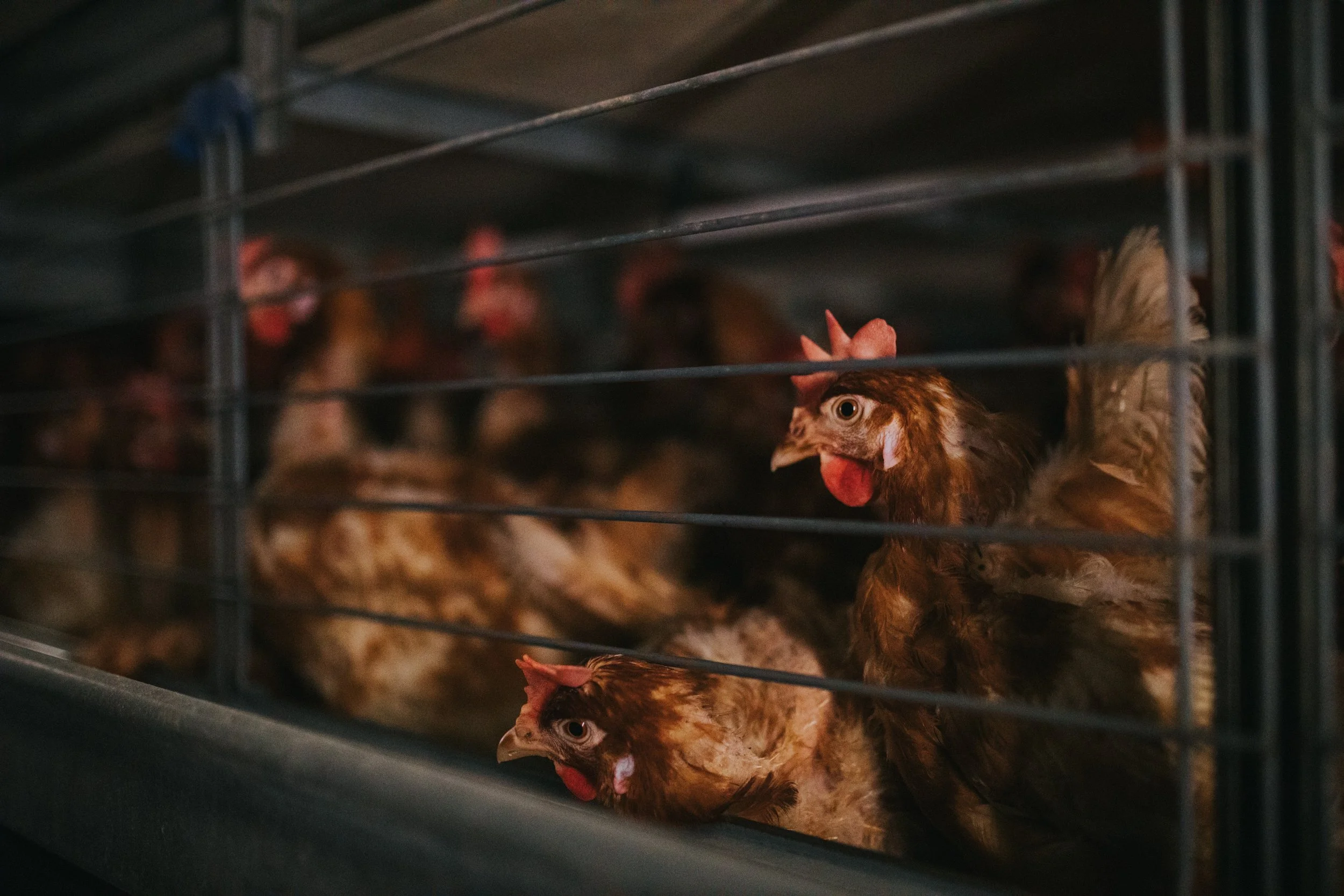
It is submitted that these cannot be satisfied in a high-density, barren IPU. The lack of enrichment suppresses natural behaviours such as foraging, perching, exploration, and dust-bathing, leading to chronic boredom, frustration, and increased incidence of harmful behaviours like feather-pecking and cannibalism. Depriving birds of behavioural opportunities also contributes to reduced activity levels, poorer leg health, and greater susceptibility to stress, compounding the physical and psychological detriment inherent in intensive conditions.
The UK Government’s January 2026 Cage Reform consultation outlines a definitive proposal to ban the keeping of laying hens in all caged environments, specifically targeting the enriched colony systems currently proposed at Manor Farm Eggs. The preferred legislative option mandates a ban on the installation of any new enriched colony cages starting in January 2027, with a total prohibition on the use of existing systems by January 2032. This policy shift is driven by the recognition that enriched cages restrict essential natural behaviours, such as wing-flapping, dustbathing, and foraging, and depriving hens of the “Five Freedoms” from Defra’s code. This is supported by significant public sentiment, with recent polling showing that 94% of the public find enriched colony systems unacceptable. Given that major retailers have already pledged to stop selling eggs from these systems, granting an environmental permit for an intensive facility that is set to become legally obsolete within the next several years would undermine the government's stated objective of transitioning the UK egg sector to sustainable, higher-welfare, cage-free production.
Conclusion
Given the absence of a full EIA, and the significant consequences to local amenity, public health, the environment, and animal welfare, the Environment Agency should refuse this application.