
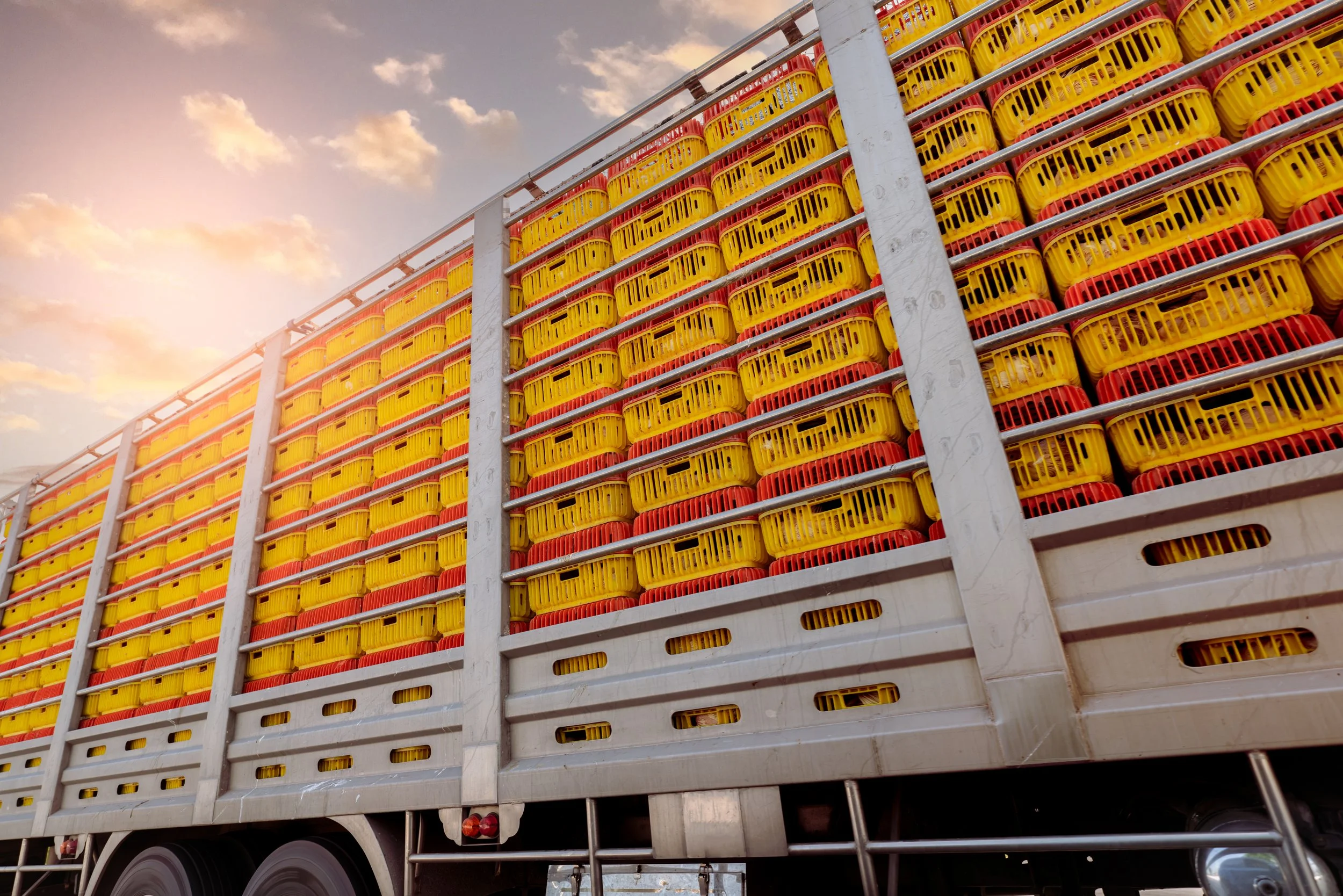
Sandycroft Slaughterhouse
OBJECT NOW!
Sandycroft
Deadline: 8th October 2026
Please submit your objection to this environmental permit application for a slaughterhouse in Flintshire, Wales.
How to Object to the Environmental Permit Application
Copy the objection comments below.
Click the ‘Object Now’ button below.
Scroll down on the Natural Resource Wales page and click ‘Share your views.’
At Question 2, copy-paste the objection below.
Objection comments
I object to application PAN-031585 for the reasons set out below. The application is for 2 Sisters Food Group Ltd, Glendale Avenue, Sandycroft, Flintshire, CH5 2QP.
1. There appear to be undisclosed relevant offences
Question 3a of Part C2 of the application “Have you, or any other relevant person, been convicted of any relevant offence” has been answered “No”.
This statement appears to be incorrect. There are seven relevant offences listed against the applicant.
If the statement is incorrect, this may constitute an offence under section 38 of The Environmental Permitting (England and Wales) Regulations 2016.
2. There appear to have been breaches of permit
Page 3 of the nontechnical summary states “Bird Numbers processed on site have increased over the years to a maximum of 172,000 birds per day, equating to a weekly average throughput of 1,100,000 birds.” Table S1.1 of the existing permit states “Activity to take place 6 days per week. Average of 134,000 birds, received and processed per operational day.”
134,000 times six is 804,000.
Table S4.2 of the existing permit requires “Number of chickens slaughtered per week” to be reported to Natural Resources Wales.
There would appear to have been breaches of the permit conditions as the applicant states that it is processing 300,000 more birds per week than what is currently allowed by its permit. It is not clear whether Natural Resources Wales was aware of those breaches or whether any action was taken.
3. It appears that emissions to air, water and land have not been updated
Question 2 of Part C3 of the application “Emissions to air, water and land” has been answered “As per previous variation application”.
As the number of animals slaughtered every day is increasing (or has increased) from 134,000 to 172,000 and the number of days per week slaughter takes place is increasing (or has increased) from six to seven, this is unlikely to be correct, given that emissions will increase.
4. It appears that odour complaints data has not been updated
Page 15 of the environmental risk assessment states “So far in 2025, 15 odour complaints have been received by site, only 1 of which could be substantiated.”
Data for 2025 should be completed and data for 2026 provided.
5. Duties regarding sustainability
Article 3(1) of the Well-being of Future Generations (Wales) Act 2015 requires each public body (which includes Natural Resources Wales) to carry out sustainable development.
Natural Resources Wales’ wellbeing objectives to 2030 include “Nature underpins vibrant rural communities, with a direct relationship between nature and sustainable agriculture, woodlands and those that manage the land. This relationship must be nurtured if Wales is to maintain clean water, productive soils, food supplies and fibre” and “taking urgent action to halt and reverse the decline in biodiversity, and to build the resilience of ecosystems so that nature can adapt to a changing climate and continue to provide the basis of all life – clean air, clean water, food and a stable climate”.
Natural Resources Wales is requested to explain how this application supports sustainable development and its wellbeing objectives to 2030.
The application is not for a sustainable development, but represents the expansion of the factory farming industry which is very harmful to animals, the environment, and food security, as outlined below:
The economic benefits are unquantified and legally insufficient to outweigh environmental harm. A study found that between 1961 and 2019, UK meat production increased by 87%, yet over the same time, agricultural employment reduced by 68%.
The rise of factory farms is holding back housebuilding because new homes cannot be built where the water is already so polluted from the increase in factory farms and all the manure and slurry they produce.
In fact, the industrialisation of the livestock sector has replaced small family farms with automated facilities, destroying an estimated 14,000 farming jobs and resulting in £333 million in "wages not paid".
Tourism. The cumulative impacts of odours and air pollution from this proposal, alongside other farms in the area, could have a negative impact on tourism.
Economic cost of factory farming. Emphasis should not be placed on economic growth for the livestock sector, which is a drain on the taxpayer. According to the research report "The Hidden Harms of Factory Farms," pig and poultry factory farming costs the British taxpayer more than £1.2 billion annually in hidden external costs, including:
Subsidies: An estimated 85% of subsidies that go to chicken and pig farmers are consumed by factory farms, amounting to £269M a year.
Environmental pollution: The cost of air and water pollution from factory farms is estimated to be £518M.
Public health problems: The cost of increased respiratory deaths attributable to living near large factory farms is estimated at £92M.
National economic strategies must align with the Paris Agreement and the UN Sustainable Development Goals, which scientific consensus indicates is impossible if the livestock sector continues to grow. The current food system is the largest driver of global environmental change, and shifting toward plant-based diets is estimated to reduce food-related greenhouse gas emissions by 50% by 2050.
National security risk
According to the recent national security assessment, nature is the very foundation of national security, and the degradation of global ecosystems already threatens UK prosperity through crop failures and economic insecurity. The assessment highlights that ecosystem services contributed £87 billion to the UK economy in 2022, representing 3% of GDP.
According to a recent Office for Environmental Protection (OEP) report, nature is the foundation of economic growth, and its continued degradation risks a 6% reduction in UK GDP by the 2030s.
As highlighted in a report by the World Wide Fund for Nature (WWF) (‘Transform UK farmland to boost food resilience and tackle nature crisis’), wheat and barley grown to feed farmed animals in the UK uses 2 million hectares of land - 40% of the UK’s arable land area, and wheat grown in the UK each year to feed livestock (primarily chickens and pigs), makes up half of our annual wheat harvest and would be enough to produce nearly 11 billion loaves of bread. Planning policy must shift from a "productivist" focus on the quantity of calories to the production of healthy, plant-rich diets that operate within planetary boundaries.
Preventing ecological collapse: Freeing up land from feed production and factory farming allows for nature recovery and the restoration of biodiversity.
By freeing up land used for animal farming feed and grazing animals, we could boost the economy by facilitating a more efficient and secure food system, supporting the arable and horticultural sectors to improve food security, and saving taxpayer funding currently allocated to factory farming subsidies and flood defences.
Use of Agricultural Land
Industrial animal farms degrade soil quality and should not be placed on the best and most versatile agricultural land.
Social Objective
Residents across the country experience the negative impacts of intensive animal farms, including oppressive odours, poor air quality causing respiratory and other health concerns, and flies. Factory farming is increasingly viewed as unethical and immoral, and is widely recognised as the leading cause of animal cruelty, with 80% of the public opposed to factory farming.
Complaints about odours from intensive poultry units (IPUs) are common; Dr Alison Caffyn’s research on odours from intensive livestock operations found that odours are relatively subjective, and quote Environment Agency (EA) officers as admitting that odour modelling reports are often generic and inaccurate.
Cheap poultry is a major driver of the UK’s growing fast-food sector. Chicken shops alone have increased by 21% in the past three years in London. The fried chicken market has exploded in the past two years. Over a seven year period from 2016-2023, there was a 20% increase in pig and poultry units.
Global food system sustainability is increasingly recognised as dependent on a transition away from intensive livestock production. Reports from the Intergovernmental Panel on Climate Change (IPCC) and the Food and Agriculture Organization (FAO) emphasise that high levels of poultry production contribute substantially to land use pressures, feed crop expansion, deforestation, and biodiversity loss.
Intensive animal farming is a net harm to food security owing to its unsustainability. Animal feed represents more than 50% of total domestic consumption of cereals produced in the United Kingdom, while 45% of the total amount of animal feed that is produced in the United Kingdom is used as poultry feed. Growing cereal crops to feed animals is an inefficient use of valuable arable land that could be used to grow food for humans. Wasting fertile farmland for factory farming harms long-term food security: much of this land could (and should) be used to produce crops for human consumption; the horticultural sector is vastly underfunded. Horticulture contributes to food security and should be emphasised over intensive animal agriculture. The application does not demonstrate a benefit to domestic food production, as the land and water footprint used to grow animal feed makes the proposal inefficient.
The Planetary Health Diet, formulated by the EAT-Lancet Commission to ensure the nourishment of a projected global population of 10 billion by 2050 while remaining within planetary boundaries, advocates a dietary shift towards increased consumption of fruits, vegetables, legumes, and whole grains, alongside a significant reduction in the intake of meat, fish, eggs, refined cereals, and tubers. Global food system modelling undertaken by the Commission indicates that widespread adoption of this dietary pattern could reduce greenhouse gas emissions by approximately 50% by 2050. In light of these findings, and given the clear co-benefits for both climate mitigation and public health, there is a compelling imperative to reduce the production and consumption of meat, rather than expand factory farms.
Factory farm developers argue that intensive animal farming is the only way to ensure food security and support the farming industry. This is short-sighted, considering the need to reduce our carbon footprint. Governments and industry around the world are adapting to the climate crisis. For example, Denmark has implemented an action plan on plant-based foods, with significant support from the food and farming sector. The action plan focuses on public-private partnerships to increase production, sales, and exports of plant-based foods.
Far from being economically sustainable, intensive chicken producers receive millions in taxpayer money. For example, at least £14m of public funds was paid out over three years to farm operators in the counties of Herefordshire, Shropshire, Powys, Gloucestershire, Worcestershire and Monmouthshire in England.
Factory farm developers argue that importing food will lead to more fossil fuel use, yet this is highly misleading. What you eat matters much more than where your food comes from when considering carbon footprint. The emissions from transport are minimal in comparison with the rest of the food supply chain. For poultry (broilers), most emissions come from land use change, the farm itself, and animal feed, with a smaller amount coming from transport, processing, retail, and packaging.
By facilitating a just transition for the farming community towards a largely plant-rich food system, we can free up land for forestry, wildlife, habitats, and rewilding, as well as food for human consumption; ensure both food security and national security; and protect our precious natural resources for future generations. We can remove the pervasive stench of factory farming odours from the countryside, which severely impacts quality of life, and reverse the growing threat of air pollution, causing respiratory and cardiovascular illness. We can become a leader on the global stage by reaching net-zero emissions.
Impact on food security: A recent report by Compassion in World Farming (‘Food not Feed’) highlights that animal farming is described as a staggeringly inefficient "reverse-alchemy" that converts human-edible grain into waste; for every 100 calories of grain fed to animals, only 3 to 25 calories enter the human food chain as meat. Furthermore, industrialised intensive animal farming imposes £1.2 billion in annual hidden costs on the UK taxpayer, including £518 million in environmental pollution and £91.7 million in public health costs.
According to the recent national security assessment, the UK’s current level of animal farming is unsustainable without massive imports, noting that imported soy from South America makes up 18% of all produced animal feed, and overall importing 40% of its food and significant amounts of animal feed. It is difficult to see any benefits for domestic food production or national security when the product is so dependent on imports. In an international crisis, the animals will not be fed.
Moreover, in terms of trade gaps, the UK is already producing at least 82% of the poultry meat it consumes, while the figure for more healthy and sustainably produced domestic food such as fresh vegetables is only 57% and 16% for fruit.
6. Duties regarding biodiversity
Section 6 of the Environment (Wales) Act 2016 places a duty on public authorities (as defined in subsection (9) and including Natural Resources Wales), to seek to maintain and enhance biological diversity (referred to as biodiversity). All public bodies, statutory undertakers, Ministers of the Crown and other public office holders are required to apply the duty when they are carrying on any functions in Wales, or in relation to Wales.
Natural Resources Wales is requested to explain how this application supports the maintenance and enhancement of biological diversity.