
Racecourse Farm
OBJECT NOW!
Racecourse Farm
Deadline: 17th July 2026
Please submit your objection to this environmental permit application for an intensive chicken farm in Flintshire, Wales.
How to Object to the Environmental Permit Application
Copy the objection comments below.
Click the ‘Object Now’ button below.
Scroll down on the Natural Resources Wales page and click ‘Share your views.’
At Question 2, copy-paste the objection below.
Objection comments
1. I object to application PAN-029600 by Hook 2 Sisters Ltd for an environmental permit variation to replace 8 existing sheds with 3 new sheds and increase bird numbers from 114,000 to 132,000 at: Racecourse, Babell Road, Holywell, Flintshire, CH8 8PW.
2. While Natural Resources Wales (NRW) declared the application "Duly Made" on April 15, 2026, this procedural milestone does not equate to regulatory compliance. A review of the finalised submission reveals that the applicant fundamentally fails to meet the mandatory standards required by Welsh and UK legislation, including the Environmental Permitting (England and Wales) Regulations 2016 (EPR), the Industrial Emissions Directive (IED), the Well-being of Future Generations (Wales) Act 2015, and the Environment (Wales) Act 2016.
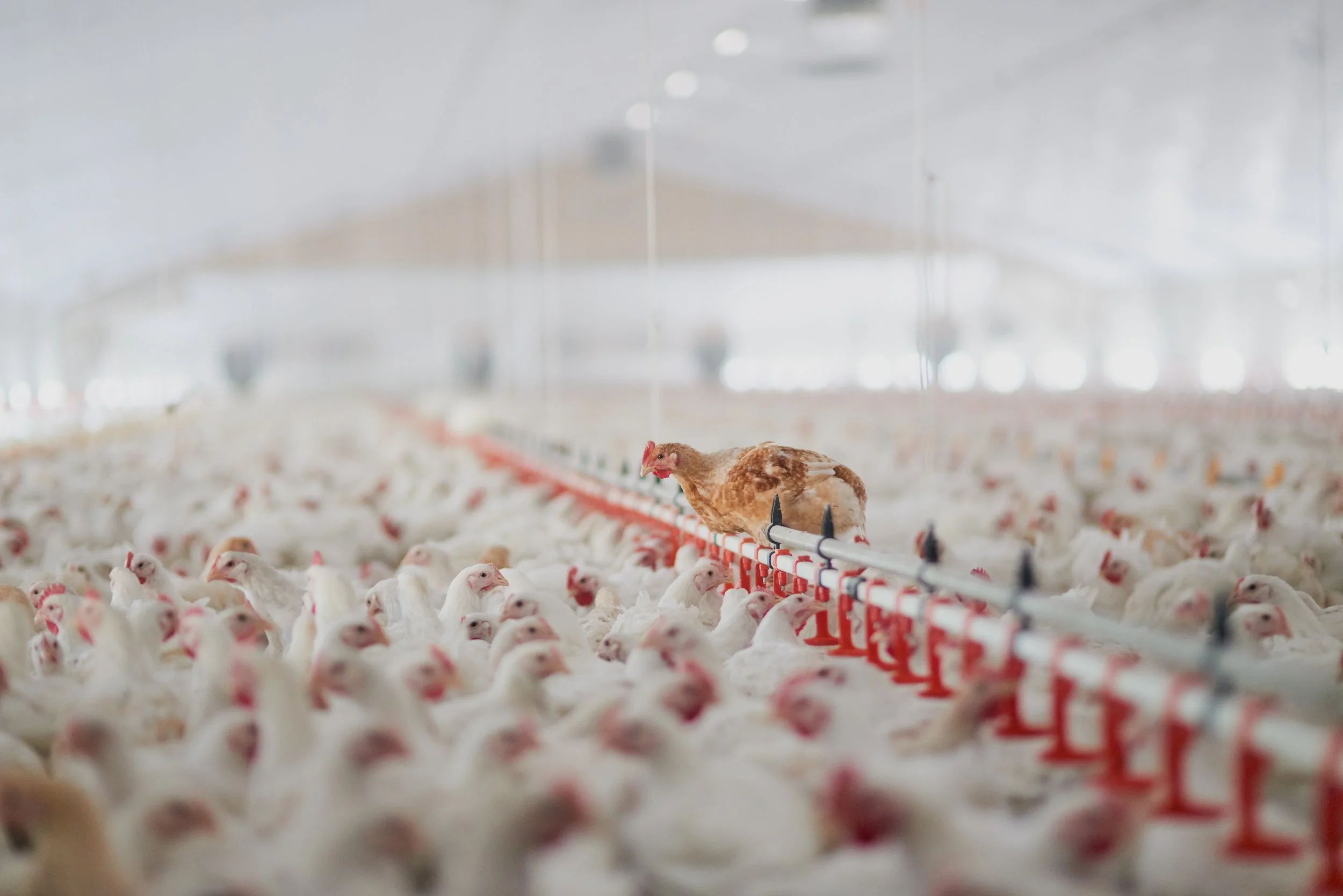
The scale of this development - 132,000 intensive broilers - poses an unacceptable risk to local ecosystems, public health, and rural infrastructure.
3. Failure of Operator Competence
Under Welsh environmental and planning frameworks, this application fails to satisfy the core criteria of Operator Competence, environmental safety, and community protection. The applicant has ticked section 3 to confirm that no relevant person has been convicted of any relevant offence. This is incorrect according to the following published information:
- Management History: Hook2 Sisters have been responsible for over 1,000 environmental breaches since 2014.
- History of Falsified Records: the company has a documented history of altering regulatory records (such as food kill dates and safety logs), therefore any data they provide in monitoring self-reports cannot be guaranteed to be accurate.
Based on their track record of permit non-compliance, regulatory data fraud, and regional pollution incidents, the applicant has not shown that they can operate this high-density facility in line with Welsh environmental regulations.
4. Failure to Protect Human Health (Well-being of Future Generations Act & EPR 2016)
The applicant has failed to demonstrate adequate control of dust and bioaerosols, directly threatening the health of local residents. NRW explicitly stated that the Dust and Bioaerosol Management Plan "has not been completed in line with the relevant guidance". Despite this, the regulator intends to issue the permit via an Improvement Condition, deferring the plan's finalisation until after the permit is granted. Under the Well-being of Future Generations (Wales) Act 2015, public bodies must act in accordance with the "prevention principle"—deploying resources to prevent problems from occurring. Permitting an installation without a guidance-compliant health plan for receptors as close as 0m (Farm Manager’s House) and 51m (Pickpocket Hall) is a direct violation of this statutory duty and the goal of a "Healthier Wales”. The applicant's own plan admits that high-level mitigation measures, such as dry filters, electrostatic precipitation, and scrubbers, are "not in place", despite five sensitive human receptors being within the high-risk 100m/250m thresholds.
5. Flawed Environmental Assessment (Environment (Wales) Act 2016 & Habitats Regulations)
The assessment of ammonia impacts on the Halkyn Common and Holywell Grasslands Special Area of Conservation (SAC)/Site of Special Scientific Interest (SSSI) (only 425m away) is technically insufficient. In April 2026, NRW admitted the applicant's ammonia approach is "not exactly in line with our guidance". Previously, the assessment was rejected for failing to adequately consider the Predicted Environmental Concentration (PEC) and missing building details. The Environment (Wales) Act 2016 requires NRW to maintain and enhance biodiversity and promote ecosystem resilience. Accepting modelling that deviates from established safety guidance for a site of European importance (SAC) fails to meet the high evidentiary standard required to ensure the site’s integrity is not adversely affected under the Conservation of Habitats and Species Regulations 2017.
6. Admitted Non-Compliance with Best Available Techniques (BAT)
Compliance with BAT is a mandatory legal requirement under the IED and EPR 2016.
The applicant’s finalised BAT Review document explicitly marks "No" for compliance with BAT 26 which requires a minimum of weekly odour "sniff tests" around the perimeter when sensitive receptors are within 400m. With multiple residences well within this distance, the applicant's failure to commit to this mandatory technique represents a fundamental breach of the Industrial Emissions Directive standards.
7. Failure to Quantify Water Consumption (Breach of BAT 10)
Under BAT 10, the operator must demonstrate structured water optimisation. The applicant proposes a capacity of 132,000 birds and relying on mains water supply, but has omitted the water volume required for operation. Until the volumes required for daily drinking, including allowance for evaporative loss during hot weather, vehicle washing and 7-8 annual washouts of 3 enormous buildings and surroundings are supplied, the application is technically incomplete. This prevents NRW from assessing true resource efficiency. This unquantified, multi-thousand-litre daily draw on the public mains poses an unmitigated hydraulic risk. Peak operational demands risk undermining the water pressure and security of supply for neighbouring residential properties. Furthermore, commercial data indicates that 70% to 80% of a broiler's water intake is excreted into the environment. Without quantified input figures, it is impossible to verify if the applicant's proposed underground dirty water tanks are sized adequately to hold the resulting waste and wash-water volumes. In this highly sensitive karst limestone region, any tank failure or overflow caused by under-calculated wash-volumes poses a direct, catastrophic pollution risk to local deep drinking water aquifers.
A full, transparent water audit and utility capacity report should therefore be provided for public consultation. Water neutrality sits within the Government’s wider policies on mitigating and adapting to climate change.
8. Regulatory Failure
The application fails to demonstrate how it will prevent the pollution of watercourses, a primary requirement of the Water Resources (Control of Agricultural Pollution) (Wales) Regulations 2021 (CoAP). The site’s core operational document, the Technical Standards April 2025, contains multiple placeholders where specific controls should be. It lists the "Clean water drainage routes" and the "receiving watercourse" for all site discharges as "Need to confirm". Under CoAP 2021, an operator must prove they have sufficient storage and identified discharge points to prevent nutrient pollution and eutrophication. An application cannot be "adequate" when the final destination of its contaminated or clean surface water remains unknown to the regulator.
9. Administrative and Reporting Failures
A high-level check by NRW revealed that the applicant submitted Forms C2 and C3 with numerous unanswered questions regarding energy usage, waste avoidance, and technical monitoring points. The applicant initially failed to identify and provide storage capacities for essential site infrastructure, including LPG tanks, feed silos, and heat exchangers, which are required to be legally permitted activities.
10. Local Habitat Degradation
The applicant’s primary justification - that replacing older infrastructure with modernised housing inherently reduces the site's environmental impact - is a deeply flawed, numbers-based abstraction. It entirely fails to address the heightened operational biosecurity risks, climate vulnerability, and cumulative ecological burdens inherent to a 15.7% flock expansion. The applicant relies heavily on technological upgrades to justify expanding the bird flock. However, modern ventilation and housing systems do not eliminate the absolute biological impacts of introducing an extra 18,000 fast-growing animals to this specific landscape. Modern ventilation acts as a high-velocity extraction system. It concentrates and blows out massive quantities of ammonia gas and nitrogen-laden dust directly into the local atmosphere. This expanded chemical output poses a severe threat to highly sensitive ecological receptors nearby, including:
- Ancient woodlands: Located within 2km of the installation, these irrecoverable habitats are highly vulnerable to nitrogen deposition, which alters soil chemistry, smothers unique flora, and kills native lichens.
- Local watercourses: Run-off and airborne deposition threaten nearby aquatic networks with severe nutrient enrichment.
- The Dee Estuary: Situated just 4.5km away, this internationally protected Ramsar, Special Protection Area (SPA), and Special Area of Conservation (SAC) faces compounding pressures from upstream phosphate and nitrogen loads.
Furthermore, NRW cannot legally ignore the severe environmental and cumulative off-site impacts of the extra waste and manure generated by 132,000 birds. Proceeding under an unlawfully narrow assumption that off-site waste disposal falls outside the permit's remit directly replicates the legal errors currently being challenged in the High Court judicial review River Action v Natural Resources Wales (2026).
11. Climate change, heatwaves, and mass-mortality vulnerability
With the accelerating frequency and severity of summer heatwaves in Flintshire, expanding high-density broiler operations poses an unacceptable biosecurity and public health risk. A Carbon Brief report has exposed catastrophic heat related mass-mortality of chickens in transit. During extreme heat events, modern ventilation systems routinely fail or become overmatched by ambient external temperatures, causing tens of thousands of chickens to suffer from severe heat stress and die during transportation. The applicant provides no transparent, granular details regarding how the modified facility or the transporters will cope with severe climate-induced heat stress, and plan only to reduce stocking density to 30kg/m2 despite the European Food Safety Authority (EFSA) 2023 scientific opinion, which explicitly warns that stocking densities must not exceed 11kg/m² to prevent severe suffering, physiological stress, and systemic immune collapse in broilers.
As established in R (Animal Equality UK) v North East Lincolnshire Borough Council EWHC 1331 (Admin), animal welfare metrics and their cascading environmental and biosecurity knock-on effects cannot be treated as a legal non-entity; they are fundamentally material to evaluating an industrial installation's holistic footprint.
12. Supply chain impacts and breach of statutory well-being duties.
This expansion represents a substantial net increase in raw input demands. It relies on high-demand soy feed linked directly to global deforestation, international habitat degradation, and highly inefficient plant-to-animal protein resource wastage. As a Welsh public body, NRW is explicitly bound by Section 3 of the Well-being of Future Generations (Wales) Act 2015 to carry out sustainable development. Permitting an operational expansion that actively drives international habitat destruction, while exacerbating risks to food security and public health (via zoonotic pandemic vectors and accelerated antimicrobial resistance), completely undermines Wales’s statutory goal of a "Globally Responsible Wales."
This application lacks the transparent operational safeguards required to satisfy the Sustainable Management of Natural Resources (SMNR) principles that NRW is legally mandated to uphold.
13. Based on the planned 7.5 cycles per year, the applicant proposes to rear 990,000 chickens for meat annually.
A public authority exercising functions in relation to Wales must seek to maintain and enhance biodiversity, and in so doing, promote the resilience of ecosystems, so far as consistent with the proper exercise of its functions. This applies to Natural Resources Wales (NRW).
NRW works towards the Welsh Government’s long-term vision where nature’s recovery is a national priority, focusing on creating naturally functioning catchments and embedding ecosystem resilience into land management. For 2026, NRW’s priorities include working closely with farmers to sustainably manage natural resources and supporting environmentally friendly, nature-based agricultural practices.
14. The biodiversity and ecosystem duty for Welsh public authorities is set out in Section 6 of the Environment (Wales) Act 2016. Natural Resources Wales’ specific statutory purpose, duties, and plans for nature recovery are outlined in the Natural Resources Wales Corporate Plan. Their ongoing approach to sustainable land management alongside farmers is detailed in the Natural Resources Wales Land Management Guidance.
In considering such sustainable land management strategies, the following points have relevance:
- Animal farming at current levels is unsustainable without imports - soy from South America makes up 18% of produced animal feed.
- Farming occupies around 70% of the UK land surface. Nature-friendly farming remains essential to both nature recovery and broader environmental goals.
- Loss of biodiversity is a national security issue.
- The EAT-Lancet Commission found that food is the single strongest lever to optimise human health and environmental sustainability on Earth.
- Agriculture and rural land use are the main sources of nitrogen and phosphorous pollution.
- The impact of spreading digestate/manure/slurry as fertiliser must be taken into account.
- Scope 3 emissions should be taken into account.
- Animal welfare considerations may be taken into account.
The world simply doesn’t need more intensive animal agriculture creating pollution of air, soil and water (locally and nationally), greenhouse gas emissions (internationally), pandemic risks (internationally), loss of biodiversity in the places where the animal feed is grown (internationally), antibiotic resistance (internationally) and of course more suffering for the animals reared in such facilities.
The Climate Change Committee’s recent report expressly recommends that, “reductions in livestock numbers are needed to go further in reducing emissions from agriculture, and to release land to sequester carbon and reduce emissions from degraded soils and habitats. To deliver this, people will need support to make alternative dietary choices to meat and dairy, and farmers will require support to diversify their businesses.”