
Residents Oppose Plans for Intensive Pig Farm Expansion in Staffordshire
17 June 2026
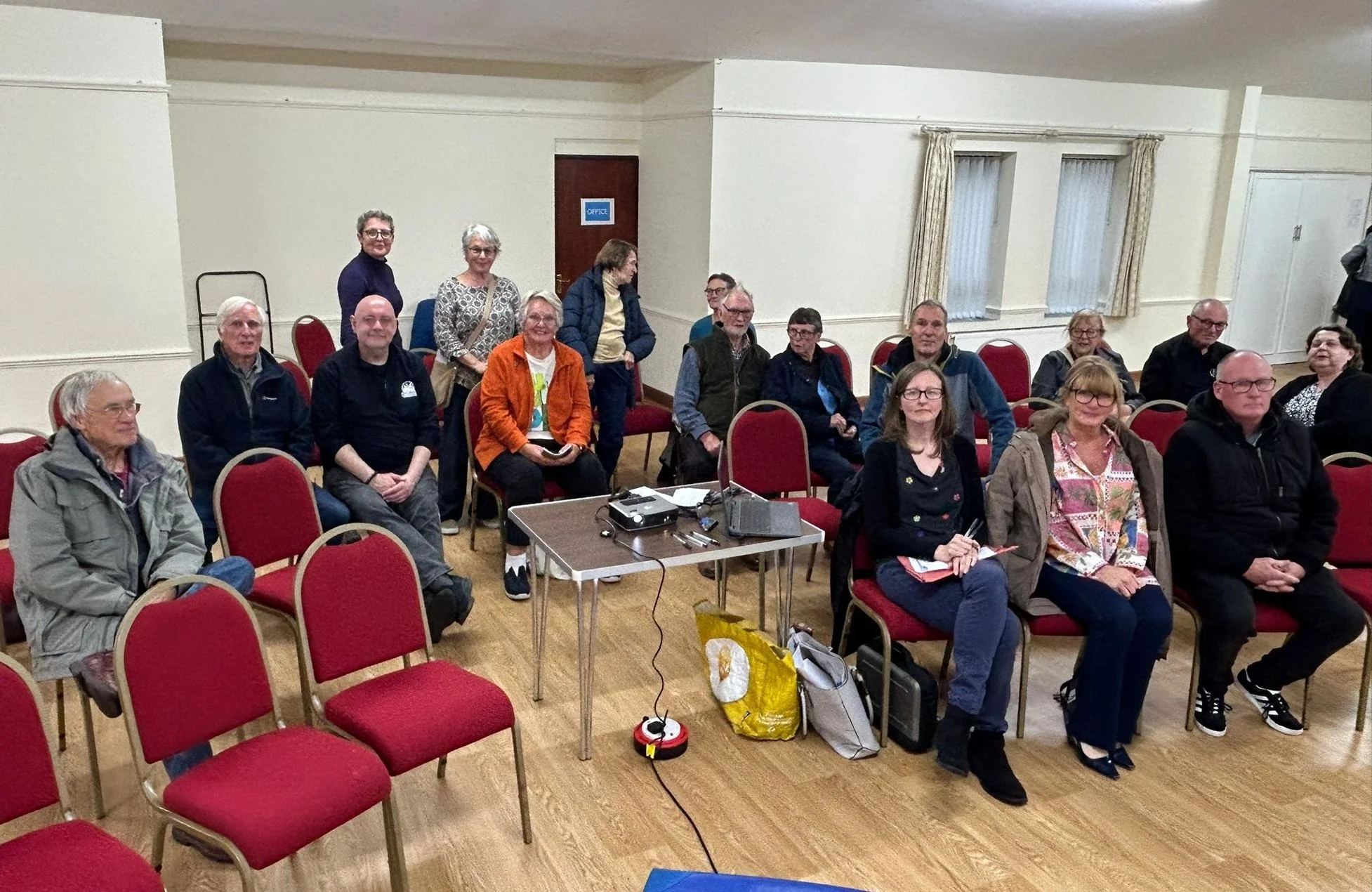
Plans to expand a factory farm to hold 4,750 pigs in Rugeley, Staffordshire provoked strong opposition from the local community at a meeting in Hill Ridware Village Hall.
Residents attended a public meeting on 11 June, with those present voicing concerns about the spread of intensive farming, the waste generated and the impacts of smells on local communities.
If approved, Woodhouse Farm would build three new sheds which would together confine an additional 2,850 pigs at any time. [1]
Heulwen Barnett, 72, retired, from Blithbury, said:
“As a resident of Blithbury for 30 years, I am aware of a significant increase in frequency of large stock and feed lorries and farm machinery passing my home, the smell of manure spreading and the screams of the captive pigs. The proposal to extend this enterprise by 3 more huge pig sheds, sited just metres from a public footpath, accessed along an already busy potholed single track lane, would greatly diminish the enjoyment of the local area. Surely intensive factory farming isn't the best or kindest use of our limited resources.”
The intensification of pig farming has led to deadly consequences across the UK, with many residents expressing concerns over water pollution and public health risks.
The application lies within the Blithe River and Lakes water body, which is classified as having moderate ecological status, and has poor physicochemical quality elements, especially phosphates, attributed to poor livestock management and poor nutrient management. Despite this, no foul sewage management strategy has been provided for the enlarged operation.
There are concerns about the proximity of the farm to protected sites, including Cannock Chase SAC/SSSI and Stafford Brook SSSI.
Residents also voiced worries about worsening smells, since the application has not evaluated the odour impacts of a large increase in waste disposed of on surrounding land.
Moreover, residents were concerned about the stress for the pigs of living in such cramped conditions. At Woodhouse Farm, pigs are confined indoors in an entirely artificial and highly controlled environment, where they cannot carry out normal behaviours like wallowing and foraging.
Communities Against Factory Farming (CAFF) is supporting local residents concerned about the expansion plans.
Jo Lazarus, Campaign Coordinator at CAFF, said:
“Local residents don’t want to endure the distress of hearing screaming pigs in their daily lives, and are rightly concerned about the water and air pollution that intensive pig farming causes.
“Expanding this factory pig farm would trap thousands more intelligent animals into highly stressful crowded conditions. On intensive pig farms, tail biting and cannibalism become routine because the pigs are so frightened and stressed. There is nothing humane about factory farming.”
Intensive farming for pigs is defined as having more than 2,000 pigs on a single site. Today, around 85% of farmed animals in the UK are in factory farms. [2] [3]
Ammonia pollution hotspots have been identified in areas with some of the greatest numbers of intensive pig and poultry farms in Britain, research has revealed. [4]
ENDS
Word Count: 495
About CAFF
Communities Against Factory Farming (CAFF) works closely with residents across the UK to review planning applications for intensive farms and submit strong, evidence‑based planning objections. The organisation has helped communities block and overturn multiple intensive poultry unit applications when councils overlooked key environmental and animal‑welfare issues.
More high res images here: https://show.pics.io/caff
All images and videos in this file, on our social media, and on our website can be used with credit to Communities Against Factory Farming under ‘fair use’ for the purposes of reporting.
For more information or further comments, please contact:
Daniel (Press Back Office) press@caff.org.uk
Notes for Editors
[2] https://www.gov.uk/guidance/pigs-and-poultry-intensive-farming-environmental-permits
[3] https://www.ciwf.org.uk/our-campaigns/factory-farming-map/