
‘Detrimental’ and ‘Inhumane’: Residents Deeply Concerned By East Lindsey Factory Farm Expansion Plans
Two dozen local residents came together at a public meeting in North Cotes, East Lindsey, to oppose a major new intensive poultry unit (IPU) planned for the village. [1]
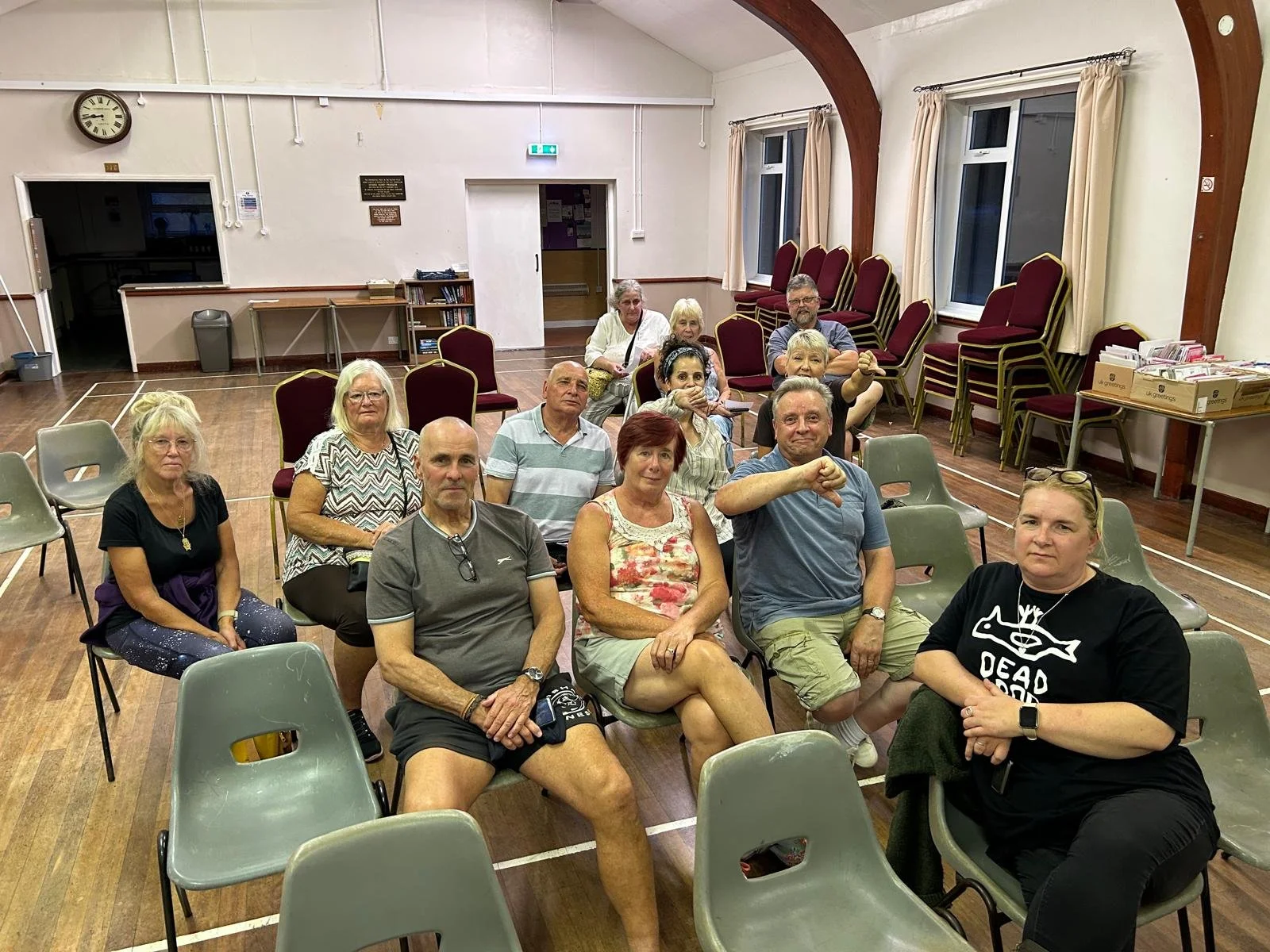
The proposal to build three new sheds for an intensive chicken breeding farm of 39,999 birds has met strong local opposition.
Some 22 neighbours attended a community meeting at North Cotes Village Hall on 13 August 2026 to discuss plans to oppose the development.
Alison Peek, 72, a retired teacher from North Cotes, said:
“Unfortunately, Lincolnshire is becoming a ‘dumping ground’ for so many ‘projects’ supposed to bring benefits to the region but which will ultimately have an extremely negative impact on the people who live here and on the environment.
“There are already more intensive animal-rearing units in Lincolnshire than any other county. This particular unit will employ only one person but the negative impact will be felt by so many: smell, flies, dust, increased traffic, air and water pollution, not to mention the animal welfare issues.”
Lincolnshire has become a factory farming hotspot, with severe consequences for health as a result of high concentrations of ammonia, which is emitted from animal waste and is linked with health problems including asthma, heart disease and chronic lung conditions. [2] The accumulation of IPUs in Lincolnshire is also putting unbearable strain on the River Witham. [3]
Residents raised concerns that they wouldn’t have known about the application if they hadn’t been alerted by Communities Against Factory Farming (CAFF), which is supporting the local community. [4]
Samantha Atkinson, 52, a Fleet and Compliance Coordinator from Marshchapel, said:
“I have numerous concerns against this proposed application. The size in comparison to the previous use, the impact on green space including the nature reserve located nearby and animal welfare to name but a few. I believe this application, should it be successful, will have a detrimental effect on our local and wider community.”
Lincolnshire Wildlife Trust has objected to the proposal and called for the cumulative impacts to be assessed. In its consultation response, it stated: “With increasingly numerous intensive agriculture units proposed, we strongly recommend that a cumulative impact assessment of poultry waste disposal should be undertaken.” [5]
Carol Wilkinson, age 61, who lives in North Cotes, added:
“I object to the proposed intensive poultry farm in Sheep Marsh Lane, as apart from the impact of noise, smell, flies and the risk to the local established wildlife population, I feel that intensive farming is inhumane and should be a thing of the past not the future.”
Jo Lazarus, Campaign Coordinator at Communities Against Factory Farming (CAFF), said:
“It is clear that local people do not want yet another factory farm in East Lindsey. This intensive breeding facility is likely to impact local residents with dreadful odours and noise disturbances, as well as trapping tens of thousands of birds into sheds where they will never see the light of day.”
The application for 39,999 chicks is one below the threshold at which a full environmental permit would be mandatory.
ENDS
Word count: 516
Communities Against Factory Farming (CAFF) works with residents across the UK to review planning applications for intensive farms and submit strong, evidence‑based planning objections. The organisation has helped communities block and overturn multiple intensive poultry unit applications when councils overlooked key environmental and animal‑welfare issues.
All images on our social media and on our website can be used with credit to Communities Against Factory Farming under ‘fair use’ for the purposes of reporting.
For more information or further comments, please contact:
Daniel (Press Back Office), press@caff.org.uk
Notes to Editors
[2] https://airqualitynews.com/health/interactive-map-reveals-ammonia-hotspots-from-factory-farms/
[3] https://www.lincolnshirelive.co.uk/news/local-news/charity-claims-river-witham-lincolnshire-9156002