
Take part in the Government Consultation on Carbon Dioxide Stunning of Pigs
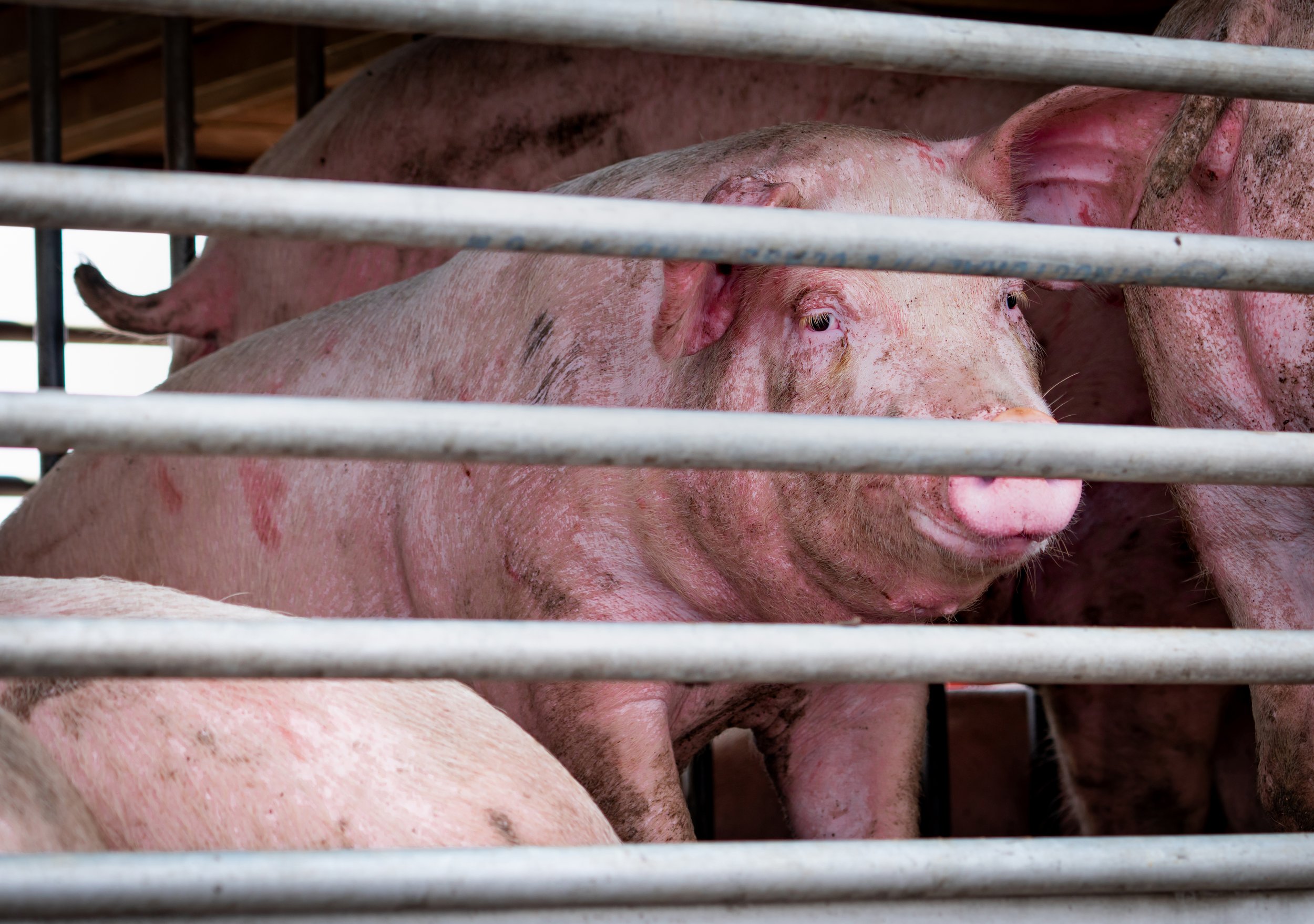
We’ve commissioned expert guidance to create a template response to the government consultation. Scroll down to see the full text or download it here.
Consultation closes 21 Dec 2026.
Use these template answers to complete Defra’s Consultation on Carbon Dioxide Stunning of Pigs, which can be filled out here: https://consultations.defra.gov.uk/phasing-out-carbon-dioxide-stunning-of-pigs
Copy and paste your answers into the relevant questions; feel free to adapt your answers and share your personal experience, where appropriate.
Q1. Would you like your response to be treated as confidential? (mandatory)
[Yes/No]
Q2. What is your full name?
[Your name]
Q3. What is your email address?
[Your email address]
Q4. Are you responding as an organisation or an individual?
Individual – You are responding with your personal views, rather than as an official representative of a business, business association or other organisation
Q5. Which of the following best describes your role?
Member of the public
Q6. Where are you based
[Location]
Q7. Our aim is to improve pig welfare by prohibiting carbon dioxide stunning of pigs. Pigs would need to be stunned instead by an alternative stunning method which is permitted by current legislation. Therefore should the use of carbon dioxide when stunning pigs be banned?
Yes
Please explain your response and provide evidence where possible
CO₂ stunning is the technology of high-speed, high-volume slaughter, not just a stunning method: CO₂ gas pits exist to keep very large numbers of pigs moving through a plant. Defra models a single CO₂ stunner as handling 3,872 pigs an hour, falling to 2,766 with argon, and its own Impact Assessment records that the method is used for its lower costs and production efficiencies rather than its welfare outcomes. Only 12 UK plants use these systems to stun an estimated 9.7 million pigs a year, an average of about 800,000 pigs per plant (our calculation). The scale is visible in current planning applications where CO₂ facilities are planned as part of abattoirs. For example Pilgrim’s Pride’s current application at its Westerleigh plant near Bristol (South Gloucestershire Council reference P25/02416/F) would increase capacity from 19,000 to 25,000 pigs a day, a rise of about a third.
Pigs are sentient beings, and the stunning pit is only the last stage of an intensive system: UK law recognises that vertebrate animals, including pigs, are sentient. EFSA’s 2022 opinions found serious welfare problems from the use of CO₂ to stun pigs and these issues are echoed in both the opinions of the Animal Welfare Committee (‘AWC’) and Defra’s supporting material to this very consultation.
Q8. If the use of carbon dioxide when stunning pigs is going to be banned, do you agree that a three-year transition period should be given?
Disagree, it is too long
Please explain your response and provide evidence where possible
I believe that a one-year transition period provides a better outcome for animal welfare while remaining practically and financially viable:
Every extra year means millions more pigs suffer: With approximately 9.7 million pigs a year currently being stunned with CO₂ a two-year instead of three year transition period spares roughly 19.4 million from the suffering caused by CO₂ stunning. This was recognized by the AWC which advised that any transition should be ‘as short as possible’ with industry implementing change as quickly as possible.
The physical change is limited and achievable within one year: The AWC’s figures suggest only 12 plants in the UK use CO₂ gas systems. Argon like CO₂ is heavier than air so experts consider that many existing pits used in CO₂ gas systems can be converted for argon systems, with modified sensors with the EU-funded research project PigStun estimating that a retrofit could take just 1–2 days in some cases.
Q9. What barriers, if any, do you foresee with transitioning to an alternative stunning method for pigs?
The primary barrier identified by the pork industry as preventing them from moving away from CO₂ gas stunning is slower stunning of pigs and resulting in reduced throughput of animal products:
Conversion must replace, not expand, intensive slaughter capacity: Defra’s central scenario assumes six of the eleven large plants build a second stunner and that UK slaughter capacity rises from 9.7 million to 10.7 million pigs a year, an increase of about 10%. A ban on CO₂ stunning should not become a route to expanding industrial slaughter. Any works needing planning permission should be assessed for odour, noise, traffic and effluent impacts on neighbouring communities, and consent for conversion should not be used to raise daily kill limits.
Q10. The Consultation Impact Assessment assumes that industry would move to argon gas stunning as an alternative to carbon dioxide. What is your preferred alternative stunning method to carbon dioxide?
Don’t know
I recognise that Argon gas is a better alternative to CO2, however, I also draw Defra’s attention to Jenny L. Mace and Andrew Knight’s research titled ‘Pig welfare and ethical considerations during abattoir stunning: CO2 vs. alternative methods such as argon gas', in which they explained that '...pigs still experience hypoxia in argon, and die from brain hypoxia, without immediate loss of consciousness. Air hunger and gasping may still be evident, albeit to a far lesser extent. For these reasons, argon remains far from an ideal alternative to CO2. With all CAS methods, it is the actual stunning process that is the cause of negative welfare. Thus, it becomes especially difficult to argue how the practice provides a“humane death”—a key purpose of stunning.'
While I encourage the transition to higher welfare slaughter, I urge Defra to make this part of their agricultural and food policy as a transition to higher welfare and a plant rich food system at the same time. The government should realise that a small change in the way pigs are killed, while crucial, will not address the severe welfare harms of the entire factory farming system.
Q11. The Consultation Impact Assessment explores options such as increasing working hours or installing additional equipment to help maintain the number of pigs processed if alternative stunning methods are introduced. How likely do you think that these options would maintain current processing levels?
Fairly likely
Please explain your answer (if possible).
As already explained in the consultation documents, Defra modelling shows that throughput loss associated with moving away from CO₂ gas stunning can be engineered and worked around. This should be done as remediable concerns around throughput should not be allowed to override welfare concerns on such a mass scale.
Q12. Are you currently a pig processor or part of an organisation representing or supplying pig processors? (required)
No
Q13. Are you a supplier of either carbon dioxide or argon gas?
No
Q14. Are you a retailer, food manufacturer or involved in food services?
No
Q15. Do you have any additional information or evidence that you wish to share in relation to costs or feasibility?
The change is technically feasible and improves supply resilience: The Government itself notes that moving away from CO₂ could reduce dependence on CO₂ gas supplies vulnerable to disruption. Defra's Impact Assessment highlights that CO₂ is a low-value by-product whose UK supply has been disrupted several times, whereas argon comes from air-separation plants with steady output, and that CO₂ shortages have forced prioritisation of slaughter and risked welfare culls.
A fair transition for workers and communities should be built in: Defra expects the conversion work to create about 24 additional jobs and does not anticipate plant closures. The transition must nevertheless focus on the communities where CO₂ gas stunning facilities are found, along with the slaughterhouse workers and their representatives from the outset. Public investment should be directed at moving away from industrial pig production to protect animals, local communities and the environments they live in, not at expanding capacity.
Trade
The UK is a world leader in animal welfare standards, and the government is proud of the high animal welfare standards that underpin our high-quality produce. The UK’s reputation for high quality products drives demand for UK goods and we want to improve and build upon that record, working in partnership with industry to establish higher welfare animal systems.
According to HMRC data, the UK imported 697 thousand tonnes of pig meat (including ham, bacon, sausages and other related products) in 2025, with Defra data showing domestic production totalled 975 thousand tonnes in 2025. However, the UK imports and exports different cuts of pork because domestic consumers favour high‑value cuts such as loins and bellies, while overseas markets demand other parts of the carcass, leading to the UK also exporting 288 thousand tonnes to other markets.
Q16. Do you think that introducing a ban on high concentration carbon dioxide stunning of pigs would increase imports of pork and pork products to the UK?
No
Please explain your response and provide evidence where possible
Animal welfare protections should be implemented through trade policy to safeguard higher welfare British farmers: The Government's Animal Welfare Strategy and Trade Strategy both recognise the problems posed to both animal welfare and the security of UK animal farmers of low-welfare imports. Both Strategies consider further action to implement animal welfare trade safeguards and polling indicates that 84% of the British public support restrictions or bans on imports that don't meet UK welfare standards. The Government should therefore pair the ban with import measures, such as labelling or restrictions in trade agreements on imports of pork products which have been produced using CO2 stunning.
Q17. Do you think that introducing a domestic ban on high concentration carbon dioxide stunning of pigs would increase exports of pork and pork products from the UK?
Don’t know
Q18. Please provide any comments or evidence on the environmental impacts the proposed policy may have.
Argon avoids a fossil-fuel dependency may be better for the climate: Defra’s Impact Assessment finds that moving to argon supports decarbonization as argon is not a greenhouse gas and is usually a by-product of oxygen production. Therefore emissions from the slaughter sector which use argon instead of CO₂ are expected to fall. That said, argon is more energy-intensive to extract and construction emissions during the transition have not been monetised. The saving is real but may be small and further work is required to answer the larger environmental question on the holistic environmental impact of different stunning methods.
CO₂ stunning ties slaughter to a fossil-fuel supply chain: CO₂ is a low-value by-product of industrial processes such as fertiliser manufacture. In September 2021, two fertiliser plants in Cheshire and Teesside, which produced almost two-thirds of the UK’s CO₂, were temporarily shut after gas prices spiked. This resulted in expectations that abattoirs would run out of CO₂ within days and the National Pig Association warned of mass on-farm culls of healthy animals. Defra’s Impact Assessment likewise records that UK CO₂ supply has been disrupted several times. Therefore moving away from CO₂ stunning supported slaughter reduces the UK’s dependency on fossil fuel supply chains.
Industrial pig production and slaughter carry a large environmental footprint: A global analysis of 38,700 farms found that the impacts of even the lowest-impact animal products typically exceed those of plant-based substitutes. The Climate Change Committee’s Seventh Carbon Budget advises a shift to less meat and dairy in the average UK diet, with fewer livestock freeing land for natural habitat restoration. Plant facilities using CO₂ stunning methods on a mass scale to kill millions of pigs a year at ever greater speed works against that direction. Ending CO₂ stunning should be treated as one step in reducing reliance on intensive pig production, and transitioning the entire agricultural and food sector towards sustainable plant-rich food production, not as a reason to expand it.
Large pig slaughterhouses harm their local environment: Residents near the Westerleigh pig slaughterhouse in Greater Bristol have raised odour, noise, heavy goods vehicle traffic and waterway pollution among more than 2,200 objections to its expansion. CO₂ gas systems are built for, and enable, the throughput of the largest plants which harm the local environment and disrupt the local communities unfortunate enough to be close to these facilities.
Conversion works should face full environmental scrutiny: Where converting to argon needs planning permission, decisions should assess the cumulative odour, noise, traffic and effluent impacts on neighbouring communities of the continued functioning of modified intensive abattoirs. Any approval consent should be conditional on no increase in daily kill numbers or lorry movements which can be so distressing to local communities.
Q19. Please provide any comments or evidence you feel should be considered concerning the socio-economic impact the proposed policy may have on both producers and consumers.
Communities near large slaughterhouses carry costs that are not reflected in the price of pork: Residents of Westerleigh describe a “disgusting stench”, say the village is nicknamed “The Smelly Village”, and warn of more heavy goods vehicles on rural roads, with greater risk to residents, cyclists and pedestrians; deliveries are scheduled between 5am and 5pm. Odour annoyance is associated with poorer health. Large plants concentrate these costs on a few communities while the benefit of cheap pork is spread to industry stakeholders far away from the environmental and health impacts of where such cheap produce is made.
It is crucial that the transition to higher welfare is not used as an excuse to expand the factory farming pig industry, which is responsible for severe air pollution impacts in the form of ammonia and particulate matter (PM2.5 and 10) emissions. Pig farming accounts for 6.4% of UK agriculture ammonia emissions, which arises from the inevitable breakdown of urea in pig manure. Ammonia reacts with other pollutants to form fine particulate matter. Exposure to PM2.5 and PM20 can result in serious health effects and is associated with respiratory conditions (such as asthma), cardiovascular disease (CVD), and lung cancer, and there is emerging evidence for associations with dementia, low birth weight and Type 2 diabetes. People such as the young, elderly and those with respiratory problems are most vulnerable to these effects. Any attempts by the industry to use the transition to higher welfare to expand the factory farming pig industry should be stopped on the grounds that they will increase chronic disease by increasing air pollution.
Q20. Do you have any further comments you wish to make on the proposal?
Changing the stunning method will not remove the inherent cruelty of intensive pig production: Stunning is the last few minutes of a pig’s life. EFSA identified intensive indoor rearing as causing the most welfare problems on farm, including confinement in stalls and farrowing crates and barren pens that deny pigs their need to explore and forage, and ten highly relevant welfare consequences in transport, including group, handling and heat stress, injuries, prolonged hunger and thirst and restriction of movement. A ban on CO₂ stunning would be welcomed, but the Government should be clear that it is a minimum first step away from the age of intensive animal farming, not a settlement otherwise permitting the status quo to continue. The government should focus on supporting pig farmers to transition away from factory farming and towards plant-rich agriculture, as a necessary step for food security, national security, and combatting the animal welfare and climate crises. We must end factory farming as a nation as a moral imperative for our health, animals, and the planet.
Expansion of industrial slaughter capacity should be paused while the sector is reformed: Applications such as Westerleigh show that equipment upgrades can come with plans to raise throughput. The ban should be accompanied by planning guidance requiring cumulative assessment of odour, noise, traffic, effluent and animal welfare impacts on neighbouring communities, and Government should resist expanding intensive capacity while the transition is under way.