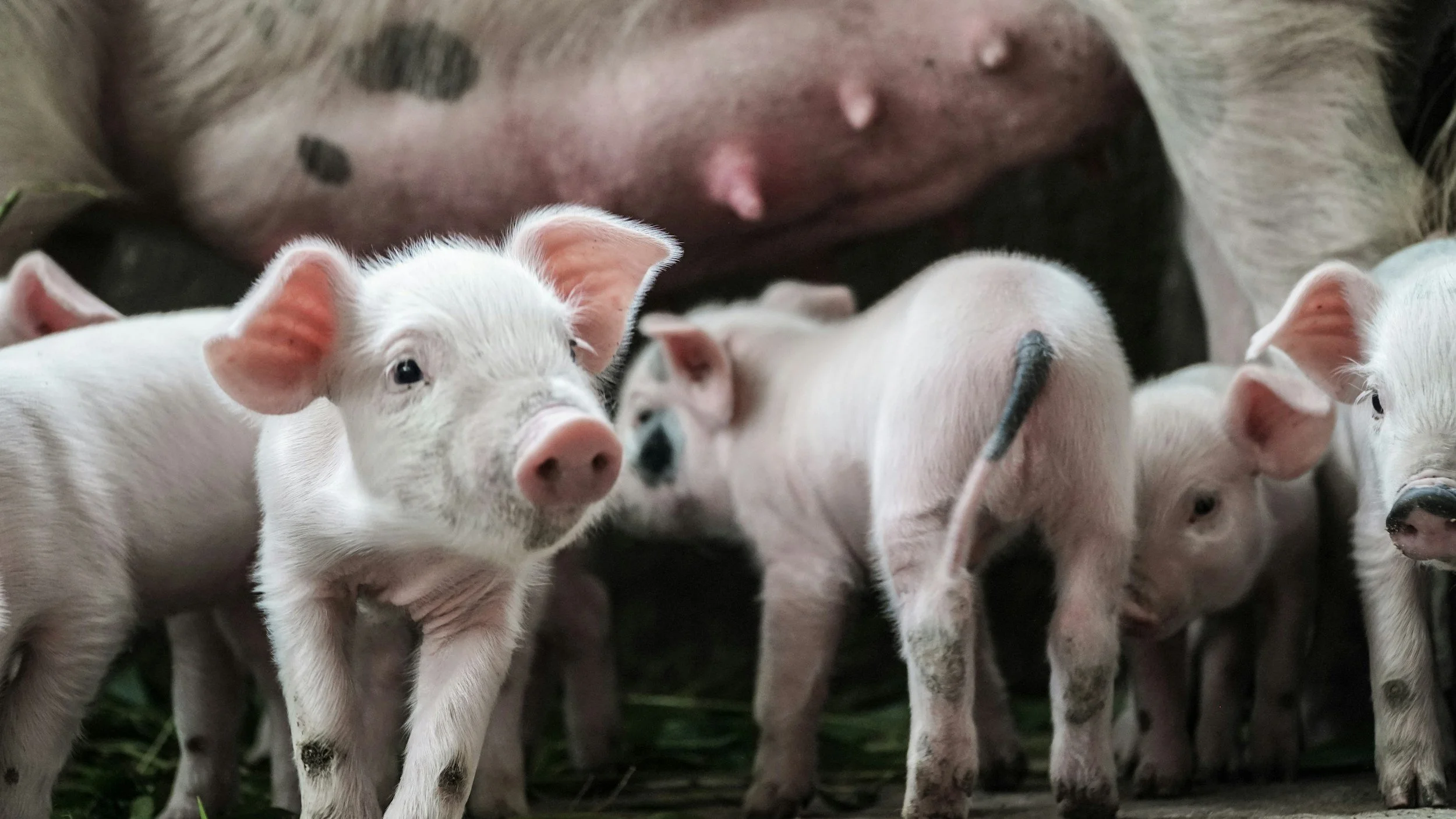
Yarrow Hey Farm
OBJECT NOW!
Yarrow Hey Farm
Deadline: 11 December
Please submit your objection to this intensive pig farm environmental permit application.
Baltonsborough, Glastonbury, Somerset, BA6 8QX
How to Object to the Environmental Permit Application
Copy the objection comments below.
Click the ‘Object Now’ button below.
Scroll down on the Environment Agency page and click ‘Share your views.’
At Question 4, copy-paste the objection below.
I urge the EA not to grant a permit.
1. I object to application EPR/HP3626LB/A001 for an environmental permit for rearing of pigs intensively in an installation with more than 2,000 places for production pigs (over 30 kg) at Yarrow Hey, Baltonsborough, Glastonbury, Somerset, BA6 8QX.
2. This application is to keep 4,486 pigs - the scale of pig farm that produces a huge amount of waste, pollution and nuisances (including odours, air pollution and water pollution) and therefore requires a full Environmental Impact Assessment under Schedule 3 of the EIA Regulations 2017. It is not clear whether planning permission was granted for this farm, and therefore whether the full environmental impact of this installation or of the proposed additional slurry lagoon at Tilham Grange Farm has ever been comprehensively assessed.
3. This application represents an appropriate opportunity for the environmental impacts of this farm to be fully assessed and I urge the EA not to grant a permit before a full environmental assessment has been completed for this.
4. It appears that the farm currently has 4,486 pigs, across 14 sheds. This constitutes a significant intensification which is a material change of use under section 55 of the Town and Country Planning Act 1990.
5. The application lacks a comprehensive plan for the management of the solid manure and slurry, which is stored on site before being either spread on land belonging to the applicant or exported to other farms. The full environmental implications on land, water and public amenity of manure storage, transportation and disposal should be fully assessed.
6. Intensive rearing of animals for meat is an inherently wasteful and inefficient use of valuable resources. Food which could be fed directly to humans is poorly converted; for every 100 grams of grain protein fed to pigs, only 15 grams of new protein is created. This does not support national or local sustainability goals. The development is not sustainable.
7. Imported soy for animal feed is closely related to deforestation of the Amazon and forests around the world, as forests are cut down to grow soy for factory farms. Deforestation directly contributes to the climate and ecological crises. Given that the first catastrophic climate tipping point has already been reached, the applicant must provide an environmental impact assessment identifying where the animal feed is coming from, what deforestation impacts it is having, and the environmental effects of the pesticides and fertilisers used to produce the crops.
8. The application lacks sufficient information regarding the amount of water required by such a large number of pigs. Given recent concerns over the low water levels in Somerset reservoirs (some of the lowest in the country), and the increasing summer temperatures, such a high demand for water should be quantified and the effects fully assessed.
10.The Environment Agency should consider the implications for public health. Swine flu is widespread in pig farming, affecting an estimated 50% of UK production pigs; a study by The Royal Veterinary College emphasises the urgent need for robust pandemic preparedness.
11. The World Health Organisation says that pig meat (red meat) probably causes cancer and processed meat (bacon) definitely causes cancer. Encouraging the large scale production of pigs is therefore contributing to the cancer epidemic and contrary to national and local goals of supporting healthy communities.
12. The welfare of pigs kept in factory farms is of public concern; in particular, according to the building inventory, bedding is used in only 5 of the 14 buildings. The other 9 buildings use partially or fully slatted floors without bedding material. These flooring systems deprive pigs of opportunities to root through bedding, one of their most basic behavioural needs, or to rest comfortably. It is also not clear from the details of the farrowing housing whether farrowing crates are used. Farrowing crates cannot meet the welfare needs of pigs and are one of the most severe forms of animal confinement. The applicant should provide full details of the care of the pigs throughout their lives, including routine mutilations, transport and slaughter procedures.
13. Somerset has 6,025,118 factory farmed animals and 27 mega farms. Intensive livestock farming in Somerset produces 611.32 tonnes of animal waste every day, creating 5657.65 tonnes of nutrient pollution every year. This application for a huge intensive pig unit therefore has serious consequences to the amenity of local people, public health, the environment, and the animals. Odours, dust, ammonia, pollution, traffic, manure, waste, dirty water, greenhouse gas emissions, and the downstream direct and indirect impacts on people, ancient woodlands, SAC/SSSIs protected sites, the climate, and rivers must all be fully assessed.
14. The applicant should be required to apply for retrospective planning permission so that a full Environmental Impact Assessment can be undertaken and the full environmental cost of this development clearly understood by the local planning authority.
The Environment Agency should refuse this application.