Tithe Farm
OBJECT NOW!
Tithe Farm
Deadline: 13 January 2026
Please submit your objection to this Intensive Poultry Unit environmental permit application.
Broad Drove, Kings Lynn, Norfolk, PE32 1QG
How to Object to the Environmental Permit Application
Copy the objection comments below.
Click the ‘Object Now’ button below.
Scroll down on the Environment Agency page and click ‘Share your views.’
At Question 4, copy-paste the objection below.
I urge the EA not to grant a permit.
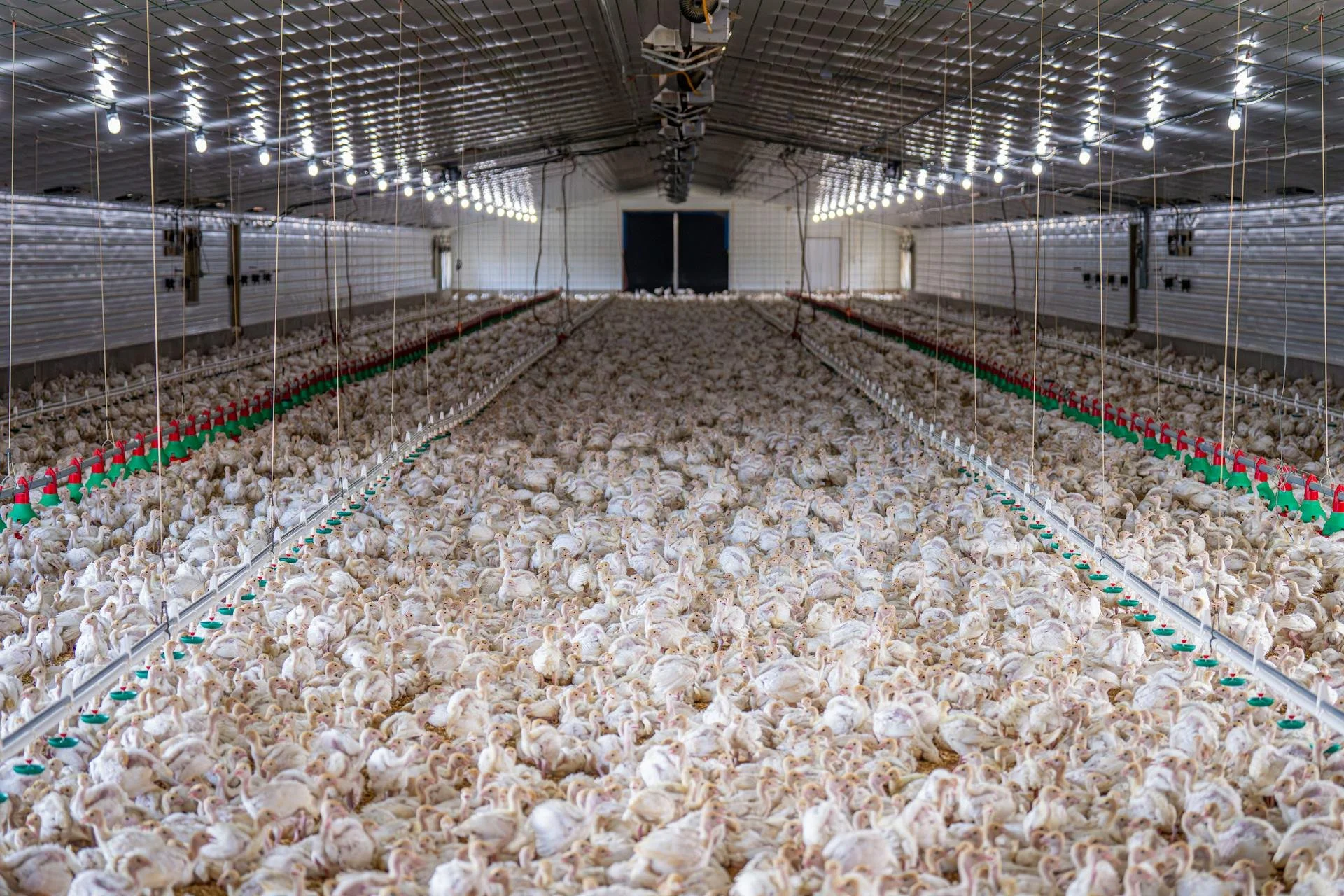
1. I object to application EPR/PP3523MS/A001 for an environmental permit to rear 193,000 broilers in 6 poultry houses at Tithe Farm Poultry Unit, Broad Drove, Kings Lynn, Norfolk PE32 1QG. The proposed annual total number of broilers produced is between 1.35 million and 1.45 million.
2. This application is for broiler places in excess of 85,000 and therefore requires a full Environmental Impact Assessment under Schedule 1, para. 17 of the EIA Regulations 2017. The relevant planning authority cannot grant permission without reviewing the EIA, under section 3 of the EIA Regulations 2017.
3. This application is for the conversion of 4 existing former turkey rearing sheds plus an additional 2 purpose built broiler rearing houses which will require planning permission. This application should therefore be ‘twin tracked’. I urge the EA not to grant a permit before the application has planning permission for the additional 2 buildings, and change to a higher number of animals.
4. The proposal is for a 50% expansion from a 4 shed to a 6 shed operation plus the increase to a high turnover production rate of 7-7.5 cycles per year. This represents a significant intensification of land use, which constitutes a material change of use under section 55 of the Town and Country Planning Act 1990.
5. Recent cases have placed stringent obligations on factory farming developments such as this one. Following Finch v Surrey County Council [2024] UKSC 20, a project specific greenhouse gas assessment calculation is required for EIA; this has not been provided. The assessment should include the emissions from animal feed, slaughter, packaging, transport, and sale. The case of R (Squire) v Shropshire Council [2019] EWCA Civ 888 confirmed that an environmental statement would be legally deficient if it failed to assess the wider impacts of the storage and spreading of effluent from an intensive poultry rearing facility. The case of NFU v Herefordshire Council [2025] EWHC confirmed that chicken manure is waste, and the LPA does not need to rely on the farming rules for water if they are not working. While the applicant proposes to send the waste bedding and manure to an unspecified power station, the application is deficient in its failure to consider the environmental and public health effects of the by-products of such energy recovery processes.
6. The case of R (Caffyn) v Shropshire Council [2025] EWHC 1497 (Admin), implies that the planning authority should assess the cumulative impacts of having multiple intensive agricultural developments in one river catchment before granting permission for another.
7. Intensive poultry production represents an inherently inefficient use of grain protein. Of 100g of grain protein fed to chickens, only 34g is converted to edible protein. Since the grain could have been fed directly to humans this represents an environmentally disastrous and unsustainable process which does not support national or global food security and sustainability goals. Furthermore, the feed is sourced from a UKAS accredited mill which provides no information regarding the associated environmental impacts of deforestation, soil degradation, air and water pollution caused by pesticides and fertilisers used to increase yields.
8. Large prospective studies have found that higher poultry consumption is associated with increased risks of chronic conditions including type 2 diabetes and gastrointestinal disease. Global health authorities also warn that intensive livestock systems, including poultry units, can amplify zoonotic disease risks due to high stocking densities and biosecurity vulnerabilities, highlighting the need for robust pandemic preparedness. These inherent risks justify a precautionary approach to further IPU expansion. Approving a new intensive poultry unit conflicts with national and international guidance on meat consumption. The EAT‑Lancet Commission recommends limiting animal-based foods, including poultry, in favour of plant-based proteins to reduce chronic disease and environmental impacts. Similarly, the UK Climate Change Committee advises a 25% reduction in total meat consumption by 2040 to meet climate and health targets.
9. Following R(Animal Equality UK) v North East Lincolnshire Borough Council [2025] EWHC 1331 (Admin), animal welfare is a material planning consideration and the public have the right to ask the planning authority to give moral weight to the horrific cruelty experienced by broiler chickens on factory farms due to both their fast-growing genetics and cramped, crowded housing.
10. Norfolk already has the third highest number of confined farmed animals in the UK; 25,748,309 factory farmed animals and 122 mega farms. Intensive livestock farming in King’s Lynn and West Norfolk can produce 596.80 tonnes of animal waste every day, creating 3290.95 tonnes of nutrient pollution every year. Adding to these problems would be reckless.
11. This application for an intensive poultry unit operating 7-7.5 cycles per year in 6 sheds has serious consequences to the amenity of local people, public health, the environment, and the animals. Increases in odours, dust, ammonia, pollution, traffic, manure, waste, dirty water, greenhouse gas emissions, and the downstream direct and indirect impacts on people, ancient woodlands, SAC/SSSIs protected sites, the climate, and rivers should all be fully assessed. It is therefore extremely important that no permit is granted prior to planning permission being granted, as the EIA will only be reviewed during the planning consultation process.
The Environment Agency should refuse this application.