Firs Field Farm
OBJECT NOW!
Firs Field Farm
Deadline: 26th February 2026
Please submit your objection to this Intensive Poultry Unit environmental permit application.
How to Object to the Environmental Permit Application
Copy the objection comments below.
Click the ‘Object Now’ button below.
Scroll down on the Environment Agency page and click ‘Share your views.’
At Question 4, copy-paste the objection below.
Objection comments
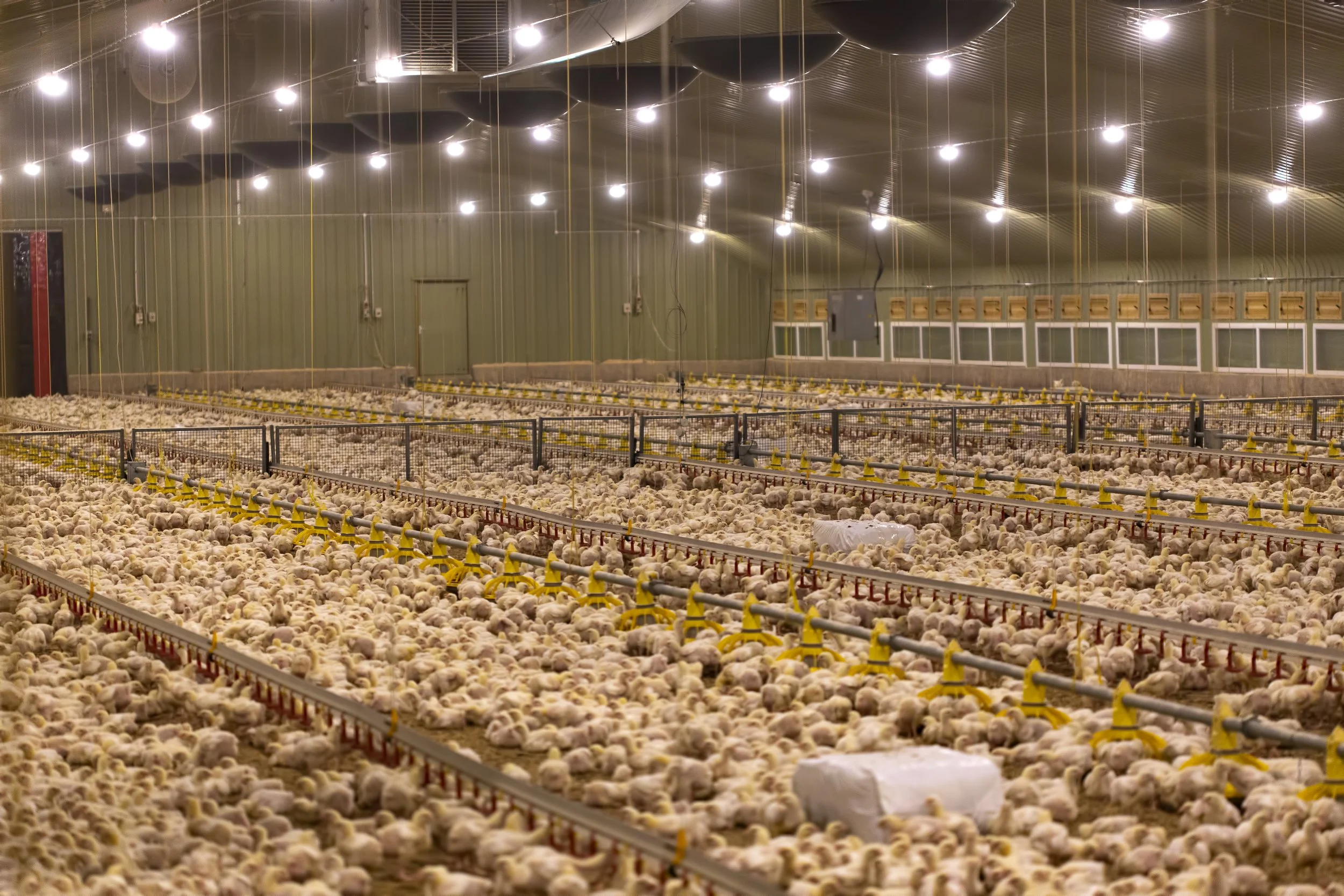
Regarding Application Number: EPR/UP3231MJ/V005 for a change from rearing 55,100 ducks to 250,000 broiler chickens, and to upgrade the ventilation in the 7 existing sheds at: Firs Field Farm Poultry Unit, Bungay Road, Hempnall, Norfolk NR15 2NG.
I urge the Environment Agency (EA) not to grant this permit based on the following grounds.
This application is for an intensive poultry installation with a capacity of 250,000 broiler chickens. Because this scale significantly exceeds the 85,000 broiler places threshold, a full Environmental Impact Assessment (EIA) is required under Schedule 1, para. 17 of the EIA Regulations 2017. The EA should not grant a permit until a comprehensive assessment of the environmental impact has been completed and reviewed by the relevant planning authority.
Q2c of Form EPC: Application to vary an environmental permit – Part C3.5 intensive farming installation asks about the scale of the permit variation. The applicant has not answered, but should have checked ‘Substantial Variation’ since his proposal is for a unit more than 6 times bigger than the threshold of a 40,000 bird increase.
This application is a major intensification rather than a minor amendment. Transitioning from a site housing 55,100 ducks to one housing 250,000 chickens represents a fundamental escalation in land use intensity. This constitutes a material change of use under section 55 of the Town and Country Planning Act 1990. The EA should seek clarification of the shed numbers. There is a discrepancy between the Site Condition Report which refers to 3 poultry sheds, and the Non Technical Summary which refers to 7.
Recent legal cases have placed stringent obligations on factory farming developments. Following Finch v Surrey County Council, a project-specific greenhouse gas assessment calculation for the full animal supply chain is required for an EIA, including emissions from animal feed, transport, and slaughter; this has not been provided. The demand for imported soy is a primary driver of global deforestation and biodiversity loss, which HM Government identifies as a threat to the foundations of national security.
The Finch case also established that environmental impacts may occur far from the source and must be fully assessed for EIA. In this instance the Pre Application Ammonia Screening considered only the cumulative effects on the closest site of special scientific interest (SSSI), however there are another 9 SSSIs within 10km of this site.
Furthermore, R (Squire) v Shropshire Council established that an environmental statement is legally deficient if it fails to assess the wider impacts of the storage and spreading of effluent. The case of NFU v Herefordshire Council confirmed that chicken manure is waste, yet this application proposes selling the spent litter without further details or a rigorous assessment of the downstream impacts. Additionally, in the event of mass culling following an avian flu outbreak, the dead chickens will be sent to landfill, raising serious concerns about animal welfare, contamination of soil and water, and public health.
The application considered the possible effects of dust, odour and noise on only the 10 residential properties within 400m, however the village of Hempnall with over 1,230 residents is just 2km away, and the hamlet of Silver Green less than 1km from the site. Given the high number of birds being kept, the 7 cycles per year necessitating 7 wash outs of 7 sheds, the movement of chickens, feed and bedding, the possibility of harming the health and amenity of all these local residents should be rigorously investigated.
Intensive poultry production is a massively wasteful and inefficient use of resources; of 100g of grain protein fed to chickens, only 34g is converted to edible protein. The grain protein used to feed these 250,000 birds could be more sustainably used for direct human consumption. Granting this permit contradicts the UK Climate Change Committee’s advice to reduce meat consumption by 25% by 2040 to meet health, food security and climate targets.
The case of R (Caffyn) v Shropshire Council confirms that authorities should assess the cumulative impacts of multiple intensive agricultural developments in one river catchment before granting further permissions. Norfolk already has 25,748,309 animals confined in factory farms and 122 mega farms. It is the county with the third highest number of animals confined in intensive farms. Factory farming in South Norfolk can produce 700.51 tonnes of animal waste every day, creating 7125.84 tonnes of nutrient pollution every year. Natural England is committed to improving biodiversity therefore adding a 250,000-place unit to this existing burden would be reckless, and it is essential that the cumulative effects of all farms in the area are fully considered.
The source, volume and sustainability of the water supply for the unit are unspecified and unquantified. In the absence of clear evidence that sufficient water is available without harming local watercourses, groundwater or private supplies, the proposal presents an unacceptable risk of environmental harm.
An intensive poultry unit on permeable Norwich Crag overlying a Principal Bedrock Aquifer and a Superficial Aquifer within a Surface Water Nitrate Vulnerable Zone presents a risk of nitrate contamination of both groundwater and surface waters. Nitrate derived from poultry manure is highly soluble and readily leaches through permeable soils, making shallow, unconsolidated aquifers particularly vulnerable to agricultural nitrate pollution and transport. The impacts on groundwater and nearby watercourses must be more rigorously assessed than the current application allows, because of the risk that excessive nitrogen inputs, including from poultry manure, will enter watercourses and aquifers and contribute to elevated nitrate concentrations that exceed environmental and drinking water standards.
Global health authorities warn that intensive livestock systems can amplify zoonotic disease risks. There is an active and ongoing risk of highly pathogenic avian influenza (HPAI) in the UK, with cases in Norfolk during 2025-6 demonstrating the elevated risk linked to large commercial operations. As of early February 2026, all of Norfolk is part of a regional Avian Influenza Prevention Zone (AIPZ) due to high risks of H5N1 in wild birds. Approving this unit also conflicts with UK Climate Change Committee advice to reduce meat consumption to meet climate and health targets.
Following R(Animal Equality UK) v North East Lincolnshire Borough Council, animal welfare is a material consideration, and the public have the right to ask the planning authority to give moral weight to the horrific cruelty experienced by chickens in factory farms due to both their fast-growing genetics and cramped, crowded housing. There are no details given of the proposed stocking densities, but they are likely to be far in excess of the 11kg/m² recommended by the European Food Safety Authority to allow birds to express natural behaviours. Crowding these social beings into large sheds causes significant stress and suffering.
Given the serious consequences to local amenity, public health, the environment and animal welfare, the Environment Agency should refuse this application.